
The Dinosaur Heart: Reconstructing the Four-Chambered Engine of a Giant
Beneath the thunderous footsteps and earth-shaking roars that dominate our image of the Mesozoic Era lies a quieter, more profound mystery: the rhythmic, powerful beat of a dinosaur’s heart. For decades, paleontologists have worked to piece together the skeletons of these magnificent creatures. But to truly understand them—to know if they were sluggish, cold-blooded reptiles or dynamic, warm-blooded powerhouses—we must look deeper, past the bone, to the engine that drove them. The quest to reconstruct the dinosaur heart is a journey into the very core of what made a dinosaur, a dinosaur.
At the center of this debate is a simple but revolutionary idea: that many dinosaurs possessed a four-chambered heart, an anatomical feature once thought to be the exclusive domain of birds and mammals. Such a heart is not just a pump; it’s a high-performance engine, capable of sustaining the energetic, active lifestyle that is increasingly becoming the scientific consensus for these prehistoric giants.
Why a Heart’s Blueprint Matters
The structure of a heart dictates the life an animal can lead. It is the dividing line between the low-energy world of most modern reptiles and the high-octane existence of birds and mammals. To understand the significance of a four-chambered dinosaur heart, we must first understand the fundamental difference in cardiac “blueprints.”
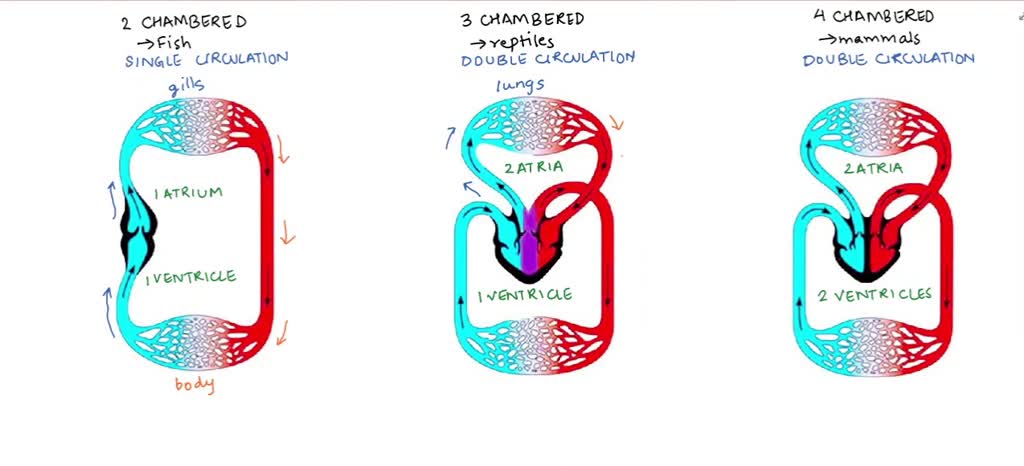
Most modern reptiles, like lizards and snakes, have a three-chambered heart. In this system, oxygen-rich blood returning from the lungs mixes with oxygen-poor blood from the body. It’s an effective system for an ectothermic (“cold-blooded”) lifestyle, which relies on external heat sources for energy and involves long periods of inactivity.
Birds and mammals, however, boast a four-chambered heart. This sophisticated organ acts as a dual pump. One side sends deoxygenated blood to the lungs (the pulmonary circuit), while the other side pumps freshly oxygenated blood at high pressure to the rest of the body (the systemic circuit). There is no mixing. This complete separation is the key to an endothermic (“warm-blooded”) metabolism, providing the constant, high-energy fuel needed for sustained activity, rapid growth, and internal temperature regulation.
| Heart Blueprint | The Engine | Power Output | Prime Example |
|---|---|---|---|
| Three-Chamber | The Mixer | Low & Slow | A Modern Lizard |
| Four-Chamber | The Separator | High & Mighty | A Cheetah… or a T-Rex? |
| Transitional | The Hybrid | Uniquely Adapted | A Crocodile |
For a dinosaur, especially a towering Brachiosaurus or a swift Velociraptor, the metabolic demands would have been immense. Could a simple three-chambered heart possibly have powered such creatures? For years, this question remained purely theoretical, until a remarkable discovery gave the debate a tangible, beating pulse.
Willo: The Dinosaur with a Heart of Stone
In 1993, a 66-million-year-old Thescelosaurus skeleton was unearthed in South Dakota. Nicknamed “Willo,” the fossil was exceptionally well-preserved. But it held a secret that wouldn’t be revealed until years later. Inside its chest cavity lay a reddish-brown, fist-sized lump of rock. To an ordinary eye, it was just another stone. But to the curious team at North Carolina State University and the North Carolina Museum of Natural Sciences, it was something more.
Using powerful medical imaging technology, including CT scans and X-rays normally reserved for human patients, the scientists peered inside the stone concretion. What they saw was astonishing. As reported in 2000, the images appeared to reveal the distinct chambers of a fossilized heart. The team identified what they believed were two ventricles—the powerful lower chambers—and a single, large aorta, the main artery leading out to the body. This structure was not that of a typical reptile. It was the clear signature of a powerful, four-chambered heart.
The discovery, published to global fanfare, was a potential smoking gun. Here was physical evidence that at least some non-avian dinosaurs had the advanced cardiovascular system of a warm-blooded animal. Willo the Thescelosaurus wasn’t just a collection of bones; it was a creature with an engine built for action, challenging the old paradigm of slow-moving, cold-blooded dinosaurs forever.
A Scientific Tug-of-War: The Controversy
The announcement of a fossilized dinosaur heart sent shockwaves through the paleontological community. But with great claims comes great scrutiny. Almost immediately, a heated debate erupted, one that continues to this day. Was the lump in Willo’s chest truly a fossilized organ, or was it a geological trick of the light?
Arguments for a Fossilized Heart:
- Anatomical Position: The object was located precisely where a heart should be.
- Internal Structure: The shapes revealed by CT scans were strikingly similar to the ventricles and aorta of a crocodilian or avian heart.
- Supporting Evidence: The finding aligned with growing evidence from bone histology that showed dinosaurs grew rapidly, a trait associated with high, warm-blooded metabolisms.
Arguments Against (The Skeptical View):
- A Geological Impostor: Many scientists argued the object was simply an ironstone concretion—a common geological formation where minerals precipitate around a nucleus, sometimes forming unusual shapes. These can mimic organic structures without containing any actual biological material.
- The Rarity of Soft Tissue: The preservation of soft tissue like a heart is extraordinarily rare. For it to fossilize in three dimensions is almost unheard of.
- Reinterpretation of Data: Later studies, as detailed in publications like Smithsonian Magazine, re-examined the evidence and proposed that the “chambers” and “aorta” were merely patterns of mineralization within the concretion, not preserved anatomy.
In the years since the initial discovery, the consensus has shifted towards skepticism. While the idea remains tantalizing, most paleontologists now believe the “heart” is a complex concretion, not a petrified organ. Willo may have lost its heart in the court of scientific opinion, but its contribution was invaluable. It forced the scientific community to ask bigger questions and seek out new lines of evidence.
Building the Engine, Even Without the Blueprint
Even if Willo’s heart is a stone, the case for a four-chambered dinosaur heart is stronger than ever. Scientists don’t need a physical fossil to reconstruct the engine; they can use logic, anatomy, and the dinosaurs’ closest living relatives.
1. Phylogenetic Bracketing
This powerful method involves looking at an extinct animal’s closest living relatives on the evolutionary tree to infer its traits. The closest relatives to dinosaurs are crocodilians (on one side) and birds (their direct descendants).
- Birds: Possess a true, highly efficient four-chambered heart.
- Crocodilians: Have a unique four-chambered heart that allows them to divert blood away from the lungs while underwater.
Since both the ancestors and the descendants of dinosaurs have four-chambered hearts, it is overwhelmingly probable that dinosaurs did too. For them to have evolved a less efficient three-chambered heart would be a major evolutionary step backward.
2. The Demands of Being a Giant
Physics and biology provide the most compelling argument. Consider a sauropod like Argentinosaurus. To pump blood more than 30 feet up its neck to its brain, it would have needed a heart of immense size and power, generating blood pressure far beyond anything a human could withstand. A three-chambered heart, with its mixing of blood and lower systemic pressure, simply would not have been capable of this incredible feat. The animal would have fainted every time it lifted its head. Only a four-chambered heart could provide the high-pressure circuit needed to keep such a colossal creature alive and active.
The Enduring Beat of a Lost World
While the stone heart of Willo remains a controversial and captivating chapter in the history of paleontology, the scientific quest has moved beyond it. The weight of evidence—from the anatomy of their living relatives to the sheer biomechanical necessity of their size and the story told by their fast-growing bones—points overwhelmingly to one conclusion: dinosaurs were powered by a sophisticated, high-performance, four-chambered heart.
The debate has shifted from if they were warm-blooded to how warm-blooded they were. We no longer envision a world of lumbering lizards, but a dynamic ecosystem teeming with energetic animals. The beat of the dinosaur heart, once a silent mystery, now echoes through our understanding of the prehistoric world—a steady, powerful rhythm driving the most magnificent creatures ever to walk the Earth.

Additional Information
Of course. Here is a detailed article and analysis on the “dinosaur heart,” incorporating the information from the provided search results.
The Dinosaur Heart: Reconstructing the Four-Chambered Engine of a Giant
In the year 2000, the world of paleontology was electrified by a groundbreaking announcement: scientists had discovered the world’s first fossilized dinosaur heart. Found within the chest cavity of a 66-million-year-old Thescelosaurus nicknamed “Willo,” the organ appeared to be a complex, four-chambered heart, a feature previously thought to be exclusive to modern birds and mammals. This discovery, published in the journal Science, promised to be the “smoking gun” in the long-standing debate over whether dinosaurs were sluggish, cold-blooded reptiles or active, warm-blooded powerhouses.
However, what began as a revolutionary discovery soon evolved into one of paleontology’s most intense and illustrative scientific debates. This is the detailed story of Willo’s heart—a tale of cutting-edge technology, bold claims, and the rigorous, self-correcting nature of science.
The Landmark Discovery: A Heart of Stone?
The remarkable specimen, a fossil of Thescelosaurus neglectus, was unearthed in South Dakota in 1993 and later acquired by the North Carolina Museum of Natural Sciences. Scientists at the museum and North Carolina State University, including paleontologist Dale Russell and his colleagues, noticed an unusual, reddish-brown iron-oxide mass, or concretion, in the dinosaur’s chest region.
Using advanced medical imaging technology—specifically high-resolution CT (computed tomography) scans—the team peered inside the stone. The results were stunning. The scans revealed what appeared to be internal chambers and vessels. The team identified two distinct ventricles and what they interpreted as a single aorta, a structure characteristic of a four-chambered heart. This contrasts sharply with the three-chambered heart found in most living reptiles, which allows for some mixing of oxygenated and deoxygenated blood and supports a slower metabolism.
As the Los Angeles Times and Cape Cod Times reported at the time, this anatomical evidence was a powerful argument for endothermy (warm-bloodedness) in dinosaurs.
The Implications: Fueling the Warm-Blooded Debate
A four-chambered heart is a high-performance engine. It ensures the complete separation of oxygen-rich blood (pumped to the body) and oxygen-poor blood (sent to the lungs). This highly efficient system is essential for sustaining the high metabolic rate and active lifestyle characteristic of warm-blooded animals.
The discovery suggested that at least some non-avian dinosaurs possessed the cardiovascular plumbing needed for:
- High Activity Levels: Sustained running, hunting, and movement.
- Rapid Growth: The ability to grow to enormous sizes at rates comparable to modern mammals.
- Thermoregulation: Maintaining a constant internal body temperature, regardless of the external environment.
For decades, the “dinosaur renaissance” of the 1960s and 70s had been building a case for warm-blooded dinosaurs based on indirect evidence like bone histology (which showed rapid growth rates) and predator-prey ratios. Willo’s heart was presented as the first piece of direct, soft-tissue evidence, seemingly settling the matter.
The Counter-Argument: A Case of Mistaken Identity?
Almost immediately after the initial excitement, skepticism emerged from the wider paleontological community. As detailed in a later analysis by Smithsonian Magazine and the blog Everything Dinosaur, critics questioned the very nature of the object. The core of the controversy revolved around one central question: Was it truly a fossilized organ, or was it a geological artifact?
The primary counter-argument was that the “heart” was not a petrified organ but a siderite concretion—a common geological formation where minerals precipitate and harden around a nucleus within sediment. These concretions can often form in odd, suggestive shapes. Skeptics argued that the “chambers” and “aorta” were not biological structures but simply the result of layered mineral deposition.
Key arguments against the heart hypothesis included:
- Extreme Rarity: The preservation of soft tissues like muscle is exceptionally rare in the fossil record. For a heart to fossilize with such internal detail would require a nearly miraculous set of circumstances.
- Lack of Cellular Evidence: Subsequent, more detailed analyses by other research teams failed to find any remnants of cardiac muscle cells or the unique helical fiber structure of a ventricle wall. The internal structures appeared to be composed of layered sand and goethite, consistent with a concretion.
- Geological Plausibility: The formation of concentric mineral layers within a decaying cavity is a well-understood geological process. It was entirely plausible that sand and iron-rich minerals simply filled a void left by the dinosaur’s decayed organs, hardening into a shape that coincidentally resembled a heart.
As the Smithsonian Magazine article title “Willo the Dinosaur Loses Heart” implies, the scientific consensus began to shift significantly away from the original interpretation.
Willo’s Legacy: A Catalyst for New Research
While Willo’s “heart” is no longer widely accepted as a true fossilized organ, its discovery and the ensuing debate were immensely valuable to paleontology. It acted as a powerful catalyst for research, pushing the field forward in several key ways.
- Technological Advancement: The study was a landmark in its use of non-invasive, high-tech medical imaging on a fossil. This pioneered a technique that is now standard practice for studying internal anatomy without destroying precious specimens.
- Focus on Physiology: The controversy reinvigorated the study of dinosaur physiology. As the 2025 review in Royal Society Biology Letters indicates, scientists are now using a multi-pronged approach to reconstruct dinosaur metabolism, respiration, and cardiovascular systems.
- Broader Lines of Evidence: Instead of relying on a single “smoking gun,” the field now builds its case for dinosaur metabolism on a convergence of evidence, including:
- Bone Histology: Microscopic analysis of bone shows growth rings that indicate rapid, mammal-like growth.
- Isotopic Analysis: The chemistry of fossil teeth and eggshells can provide clues about body temperature.
- Phylogenetic Bracketing: By comparing dinosaurs to their closest living relatives—crocodilians (cold-blooded with a four-chambered heart) and birds (warm-blooded descendants of dinosaurs)—scientists can infer shared traits.
Conclusion: The Enduring Engine of Scientific Inquiry
The story of Willo’s heart is a perfect illustration of the scientific method in action. An extraordinary claim was made, backed by exciting new evidence. That claim was then subjected to intense scrutiny, re-examination, and debate by the scientific community. While the initial conclusion has been largely refuted, the process itself led to new techniques and a deeper, more nuanced understanding of dinosaur biology.
Today, the consensus is that many dinosaurs, particularly the theropods that gave rise to birds, were indeed active animals with high metabolisms, likely supported by efficient, four-chambered hearts. The evidence for this comes not from one spectacular fossil, but from a wealth of accumulated data. Willo may have “lost” its heart, but it gave the field of paleontology a powerful jolt, forever changing the way we reconstruct the magnificent, four-chambered engines of these giant creatures.

