For over eight decades, the paleontology community has been locked in one of the most heated debates in natural history: the status of Nanotyrannus lancensis. Was this sleek, long-legged predator a distinct species of “pygmy tyrant” that roamed North America alongside the king of the dinosaurs, or was it merely a juvenile Tyrannosaurus rex undergoing the most dramatic ontological shift in the fossil record? As of 2026, advances in digital bone histology and high-resolution 3D imaging have finally moved this debate from the realm of speculative anatomy into the domain of hard, quantitative science.
The controversy surrounding the “Tiny Tyrant” has long polarized museums and researchers. On one side, proponents of the Nanotyrannus species label point to distinct cranial features—such as a narrower snout, more teeth, and different bone fusion patterns—that seem inconsistent with the massive, robust skull of a mature T. rex. On the other side, skeptics argue that these features are simply the expected markers of a sub-adult T. rex in a state of rapid, transformative growth. The resolution of this mystery is not just about naming one animal; it is about understanding how the most iconic apex predator in Earth’s history grew from a pint-sized hunter into a multi-ton behemoth.
The Evolution of the Debate: From Morphology to Microscopy

The discovery of the original 1942 skull in Montana served as the genesis for the Nanotyrannus hypothesis. For years, the identification relied almost exclusively on comparative morphology—the visual comparison of bone shapes. However, morphology is notoriously subjective in paleontology. In the early 2000s, the discovery of specimens like “Jane” and “Petey” provided more material, but the debate intensified rather than subsided. It became clear that visual inspection could not distinguish between a species that stayed small and a species that grew into a giant.
By 2026, the shift toward digital bone histology has revolutionized the study. Paleontologists are no longer just looking at the outside of a fossil; they are using synchrotron radiation and micro-CT scanning to create virtual, three-dimensional slices of fossilized bone without destroying the specimen. This digital approach allows researchers to map the internal vascularization and growth patterns with unprecedented accuracy. These microscopic structures act as a biological roadmap, revealing the physiological “speed” at which the animal was growing at the time of its death.
Osteohistology: The Biological Clock of the Cretaceous

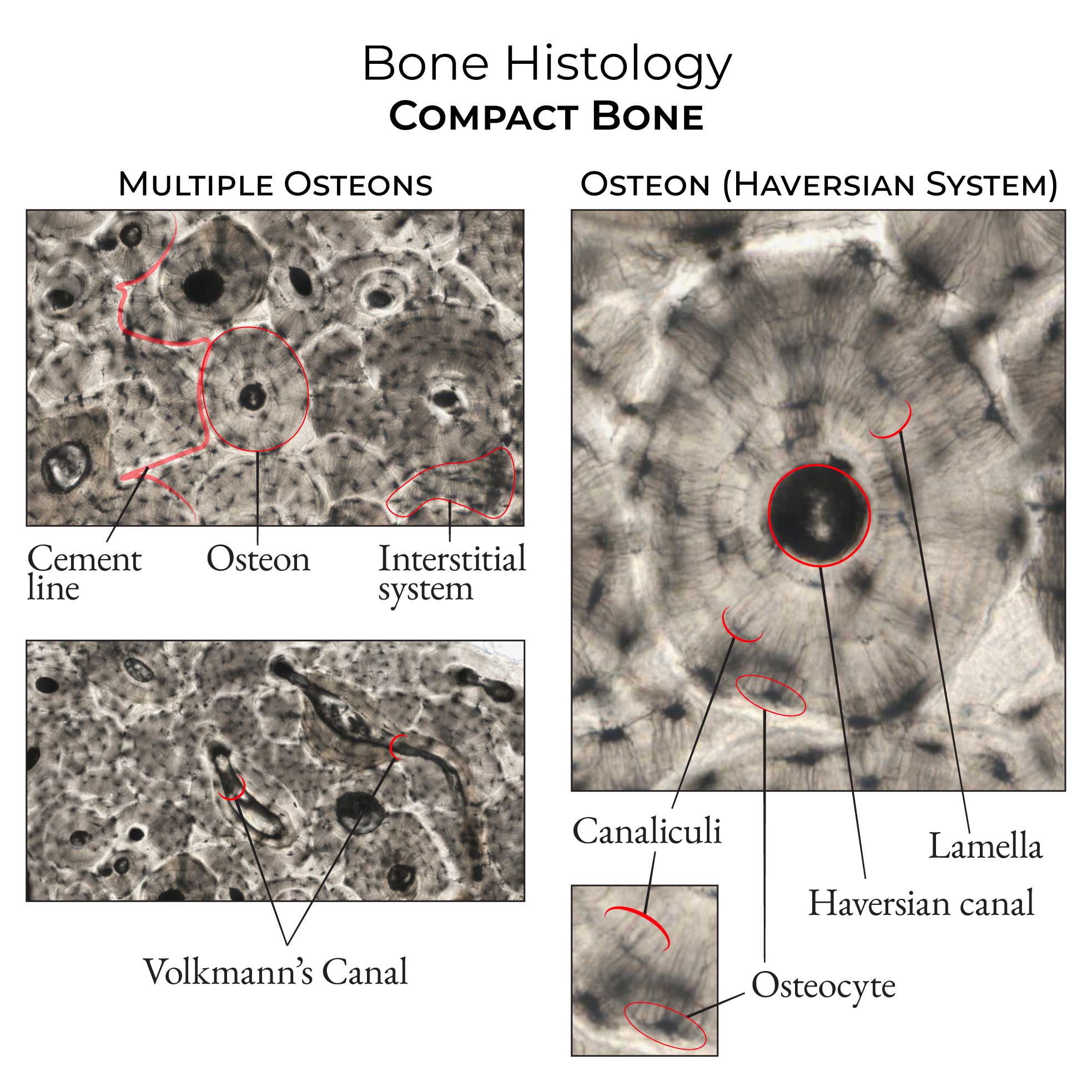
The core of the 2026 consensus lies in osteohistology, the study of bone tissue at a cellular level. Much like the rings found in a tree trunk, dinosaur bones deposit annual layers known as Lines of Arrested Growth (LAGs). During the cold or dry seasons of the Cretaceous period, the growth of the animal slowed, leaving behind a distinct, dense ring in the bone structure. By counting these rings, scientists can determine the age of the dinosaur at death with remarkable precision.
If Nanotyrannus were indeed a juvenile T. rex, the histology of its bones should show the high-metabolism, fast-growth signatures characteristic of a creature that needs to gain up to 2,000 kilograms per year during its teenage growth spurt. Instead, recent digital analysis has consistently shown something quite different. The growth rates observed in these specimens are significantly slower than what would be expected for a juvenile T. rex of the same size. Furthermore, the presence of specific bone textures indicates that these creatures were approaching their terminal size, rather than being in a phase of rapid expansion.
Digital Bone Histology and the 2026 Data Revolution

The recent integration of artificial intelligence (AI) in processing micro-CT data has allowed researchers to cross-reference thousands of bone samples simultaneously. In 2026, studies published in leading journals have utilized these digital models to demonstrate that the cranial morphology of Nanotyrannus is distinct from juvenile T. rex specimens of comparable size. The digital reconstructions show that the skull bones of Nanotyrannus were already fused in a manner typical of an adult, whereas juvenile T. rex skulls at the same size remain porous and unfused.
The data suggests that Nanotyrannus was a smaller-bodied, agile predator that occupied a different ecological niche than the T. rex. While T. rex was built for brute force and crushing bone, Nanotyrannus appears to have been a specialized hunter, likely relying on speed and maneuverability. This finding effectively resolves the “identity crisis” by confirming that Nanotyrannus is not a “Teenage Rex,” but a distinct genus of tyrannosaurid that lived alongside its larger cousin.
Ecological Niche Partitioning: Why Two Tyrants Could Coexist
One of the strongest arguments against the existence of Nanotyrannus was the ecological question: could two similar predators exist in the same environment? In 2026, paleontological modeling has provided a clear answer: yes. Through niche partitioning, different species can occupy the same habitat by targeting different prey or hunting in different ways. The smaller, lighter frame of Nanotyrannus would have allowed it to pursue smaller, faster prey that a massive T. rex would have ignored.
This discovery changes our understanding of the Late Cretaceous ecosystems. Rather than a singular apex tyrant, the landscape was likely home to a complex hierarchy of tyrannosaurids. The Tiny Tyrants were not “failed” versions of giants; they were highly successful predators in their own right, perfectly adapted to their size. This shift in perspective highlights the importance of nuanced ecological analysis over the assumption that the largest animal is always the only representative of its group.
The Impact on Museum Exhibits and Future Research
The resolution of the Nanotyrannus identity crisis has necessitated a massive update for natural history museums worldwide. Exhibits that once displayed “Juvenile T. rex” are now being rebranded to reflect the distinct status of Nanotyrannus lancensis. This is more than just a label change; it represents a fundamental shift in how the public perceives the growth and diversity of dinosaurs. The 2026 data serves as a reminder that the fossil record is far more diverse than we once imagined.
Looking forward, researchers are now applying these same digital histology techniques to other “mysterious” dinosaur fossils. Many species that were once thought to be juveniles of larger animals are being re-evaluated. The field is moving away from the “lumping” approach—where everything is assumed to be a juvenile of a known giant—toward a more rigorous, evidence-based classification system that honors the complexity of prehistoric life.
Frequently Asked Questions
1. Is Nanotyrannus definitely a separate species from T. rex as of 2026?
Yes, current scientific consensus, supported by advanced digital bone histology and 3D micro-CT imaging, suggests that Nanotyrannus is a distinct genus of tyrannosaurid. The evidence shows that these animals were not growing at the rapid, exponential rates required for a T. rex, and their bone maturity patterns indicate they were fully grown adults.
2. What exactly is digital bone histology?
Digital bone histology is a non-destructive method of analyzing fossilized bone. By using high-resolution micro-CT scanning and synchrotron radiation, scientists can “slice” a bone digitally to examine internal growth rings (LAGs), vascularization, and bone density. This allows for the study of growth rates and maturity without damaging the rare original fossils.
3. Why did paleontologists think Nanotyrannus was a juvenile T. rex for so long?
For decades, paleontologists relied on visual morphology (the shape of the bones) to classify fossils. Because young T. rex specimens were rarely found, it was easy to assume that any small, slender tyrannosaur was simply a juvenile T. rex. It was only with the advent of microscopic bone analysis that the true age and growth patterns of these specimens could be accurately determined.
4. Does this mean T. rex didn’t have a “teenager” phase?
Not at all. T. rex certainly did have a dramatic growth spurt, but we now have better methods to distinguish between a genuine juvenile T. rex and an adult Nanotyrannus. We can now compare the growth signatures of known juvenile T. rex fossils against the stagnant, adult-like growth rings of Nanotyrannus, proving they are two different biological realities.
Conclusion
The “Tiny Tyrant” mystery stands as a testament to the power of technological advancement in paleontology. By moving beyond visual assumptions and embracing the precision of digital bone histology, we have uncovered a deeper, more diverse Cretaceous world. Nanotyrannus lancensis is no longer just a shadow of the T. rex; it is a validated, distinct predator that highlights the incredible evolutionary ingenuity of the tyrannosaurid lineage. As we continue to refine our digital tools, the story of the past will only become clearer, proving that sometimes, the smallest discoveries lead to the biggest shifts in our understanding of history.
