How Fast Could a Velociraptor Run? A Biomechanical Speed Test
Strip away the Hollywood veneer, the chilling screeches echoing through a stainless-steel kitchen, and the oversized, scaly frame. The Velociraptor of our imagination is a cinematic legend. But what about the real animal? The feathered, turkey-sized predator that prowled the Cretaceous landscapes of Mongolia? To understand its true nature, we must ask a fundamental question that cuts to the core of its predatory prowess: Just how fast could a Velociraptor run?
The answer isn’t buried in a single fossil. It’s pieced together through a fascinating forensic investigation, a biomechanical speed test conducted 75 million years after the fact. Scientists become detectives, using fossil trackways, skeletal architecture, and sophisticated computer models to clock a creature that no human has ever seen move.
Deconstructing the Myth: From Movie Monster to Mesozoic Predator
First, let’s address the elephant-sized raptor in the room. The terrifying antagonists of Jurassic Park were, by scientific standards, not Velociraptors. They were based on a larger cousin, Deinonychus, and even then, their size was exaggerated for dramatic effect.
The real Velociraptor mongoliensis was a much smaller, more intricate animal:
- Size: Around 6 feet long from snout to tail-tip, but standing only about 1.6 feet tall at the hip. It weighed roughly 30-40 pounds, comparable to a modern coyote.
- Feathers: Far from being scaly reptiles, fossil evidence—including quill knobs on its arm bones—proves Velociraptor was covered in complex feathers, much like a modern bird.
- Build: It was a lightweight, wiry hunter, built for agility and quick strikes, not for bulldozing through fences.
Understanding this corrected profile is crucial. We aren’t clocking a six-foot-tall movie monster; we’re analyzing a compact, feathered, and lethal predator. Its speed was a function of this unique, bird-like anatomy.
The Science of Speed: Reading the Fossil Speedometer
Paleontologists can’t simply point a radar gun at the past. Instead, they use a blend of methods to reconstruct a dinosaur’s locomotion.
Method 1: Following the Footprints
Fossil trackways are frozen moments of behavior. By measuring the stride length (the distance between consecutive steps of the same foot) and using formulas that correlate stride to leg length and body size, scientists can estimate how fast an animal was moving. While definitive Velociraptor tracks are rare, related dromaeosaur trackways suggest they were capable of a brisk trot, but don’t provide a definitive top speed. They show agility, but not necessarily cheetah-like sprints.
Method 2: The Skeleton’s Story
The most powerful clues lie in the bones themselves. A skeleton is a blueprint for movement, and Velociraptor’s is built for bursts of speed and incredible dexterity.
- Leg Proportions: The key is the ratio between the femur (upper leg bone) and the tibia (shin bone). In many fast-running animals, the tibia is significantly longer than the femur, allowing for a longer, more efficient stride. While Velociraptor’s legs weren’t as specialized for endurance running as an ostrich’s, their slender build and leg proportions point to an animal far faster than a human.
- The Tail as a Rudder: Velociraptor’s tail was not a floppy appendage. It was stiffened by a network of bony rods, allowing only the base to flex. This turned the tail into a dynamic stabilizer. Imagine a tightrope walker’s pole—the tail would have acted as a counterbalance, allowing the Velociraptor to make incredibly sharp, high-speed turns without toppling over. This anatomical feature points to agility being just as important as raw, straight-line speed.
- The Sickle Claw: The iconic “killing claw” on the second toe was held retracted while running, kept sharp and off the ground. This means it didn’t hinder locomotion. Its true purpose was likely pinning prey in a “raptor prey restraint” model, where a quick initial pounce was more critical than a long chase.
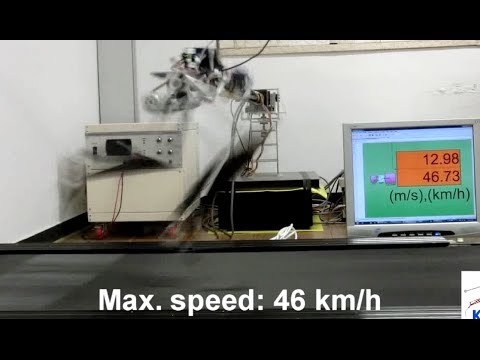
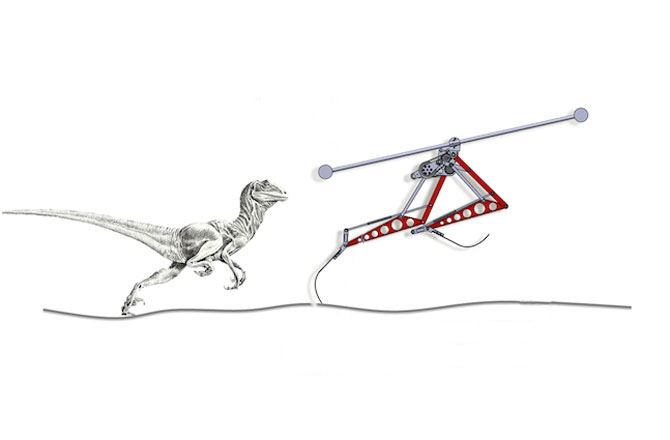
Method 3: The Digital Biomechanical Test
This is where the science gets truly futuristic. Researchers create detailed 3D computer models of the Velociraptor skeleton. They digitally reconstruct the musculature based on muscle-scar patterns on the bones and comparisons to modern relatives like birds and crocodiles.
By running simulations, they can test the limits of this digital dinosaur. They can calculate the force the leg muscles could generate and determine the most efficient running gait. These models allow for a virtual “stress test” to find a biomechanically sound top speed that wouldn’t tear the animal’s muscles or ligaments.
The Verdict: How Fast Was the “Speedy Thief”?
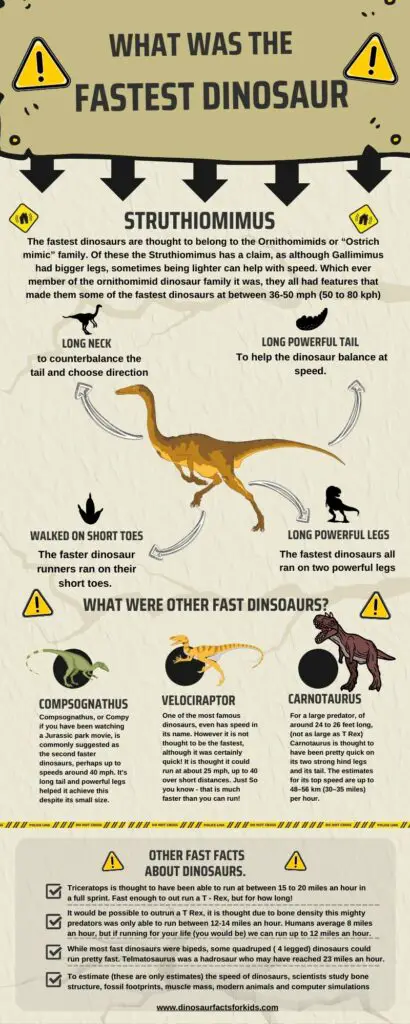
After running the numbers, analyzing the bones, and simulating the stride, a consensus has emerged. While some studies propose higher limits, the most widely accepted scientific estimates place Velociraptor’s top speed in a specific range.
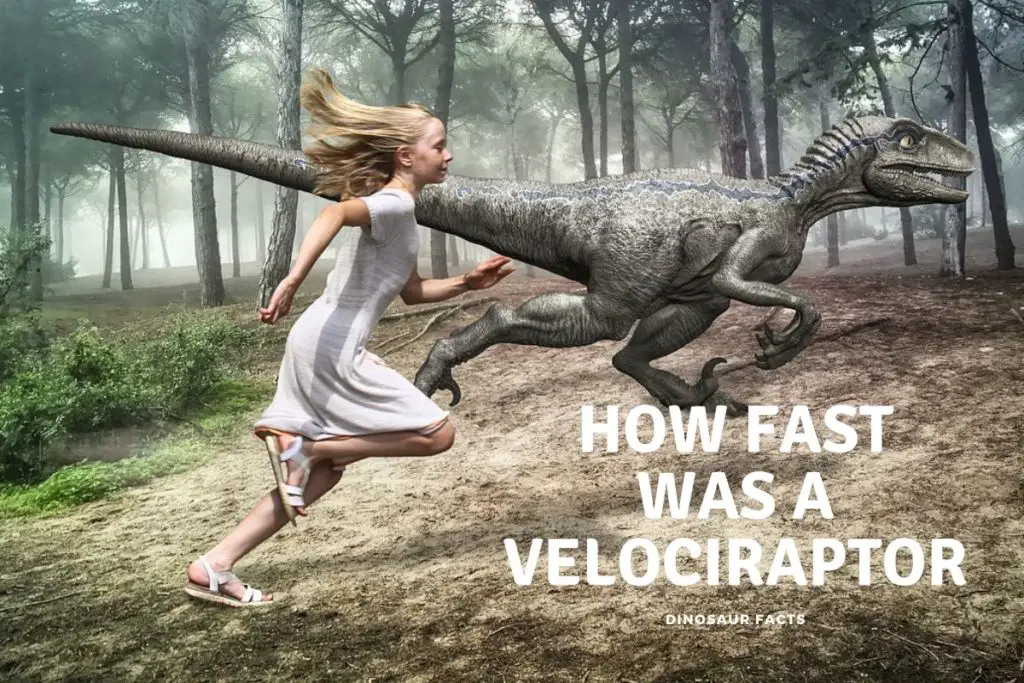
Most paleontologists converge on a figure of approximately 24-25 miles per hour (about 40 km/h).
However, some analyses of muscle potential and burst capability suggest it could have reached short-term speeds of up to 40 mph (around 64 km/h) when chasing down prey or escaping danger. This is faster than the fastest human but falls short of modern speedsters like the cheetah.
Cretaceous Speed Trap: How Velociraptor Stacks Up
To put its speed into perspective, let’s see how it compares to some other contenders, both ancient and modern.
| Contender | Top Speed (mph / km/h) | The Speed Secret |
|---|---|---|
| Velociraptor | 25-40 mph / 40-64 km/h | Agile turns via a stiff tail & quick bursts. |
| Usain Bolt (Human) | 27.3 mph / 44 km/h | Explosive power, but only for seconds. |
| Ostrich | 45 mph / 72 km/h | Long, powerful legs built for endurance. |
| Protoceratops (Prey) | ~15-20 mph / 24-32 km/h | Stocky, defensive build; not built for speed. |
More Than a Sprinter: An Agile Assassin
Focusing solely on a single top-speed number misses the point of what made Velociraptor such a successful predator. Its true advantage may not have been in a long, open-field race but in explosive, close-quarters combat.
Its speed was for closing the gap in an ambush. Its agility, powered by that incredible tail, was for outmaneuvering struggling prey. Its entire body was a weapon system designed for a lightning-fast pounce, a flurry of action where it could latch on with its sickle claws and use its body weight to control its victim.
So, while the Velociraptor couldn’t outrun a car as seen in the movies, it was a finely tuned Mesozoic missile. It was more than fast enough to catch its intended prey and agile enough to dominate its environment. The real “speedy thief” was a marvel of biomechanics—a creature whose speed, while not legendary, was perfectly calibrated for the world it ruled.
Additional Information
Of course. Here is a detailed article and analysis on the running speed of a Velociraptor, incorporating the provided search results to present a current and comprehensive overview.
How Fast Could a Velociraptor Run? A Detailed Biomechanical Analysis
The image of the Velociraptor is seared into our collective consciousness by Hollywood: a scaly, six-foot-tall, hyper-intelligent predator moving with blistering speed, easily outpacing a running human. While this depiction made for thrilling cinema, paleontological evidence paints a more nuanced—and scientifically fascinating—picture of the “speedy thief.” By examining the biomechanics of its fossilized remains, scientists have moved beyond speculation to produce data-driven estimates of its true speed.
So, how fast could a real Velociraptor run? The answer lies in a blend of anatomical study, modern animal comparisons, and sophisticated computer modeling.
The Scientific Consensus: Fast, But Not a World-Class Sprinter
Contrary to the 40-60 mph speeds suggested by popular media, most paleontologists have converged on more conservative, though still impressive, estimates.
The most widely accepted scientific estimates place the Velociraptor’s top running speed between 24-25 mph (39-40 km/h).
This figure is supported by multiple sources, including Dino World and the educational YouTube channel “Science for Kids.” At this speed, a Velociraptor would be a formidable predator. It could easily outrun the average human (who sprints at 10-15 mph) and would be on par with an elite Olympic sprinter. For comparison, this is roughly the speed of a wild turkey or a grizzly bear.
Pushing the Limits: The Case for Short, Explosive Bursts
While the 25 mph figure represents a strong consensus, some research suggests the Velociraptor might have been capable of faster, more explosive movements. Several sources, including Live Science, animalofforest.com, and neuralword.com, propose that Velociraptors could achieve bursts of speed up to 40 mph (around 64 km/h).
This higher estimate doesn’t necessarily contradict the consensus. It’s likely that 25 mph was a sustainable pursuit speed, while the 40 mph bursts were reserved for short, explosive ambushes or closing the final distance to its prey. This is a common predatory strategy seen today; a cheetah, for example, can only maintain its 70 mph top speed for a few hundred yards. For a Velociraptor, a quick, overwhelming charge would be a highly effective hunting tactic.
A Biomechanical Speed Test: How Scientists Calculate Dinosaur Speed
Scientists don’t just guess these numbers. They use a variety of methods to reconstruct a dinosaur’s physical capabilities in a process that can be considered a “biomechanical speed test.”
1. Comparative Anatomy and Limb Proportions:
The most critical evidence comes from the Velociraptor’s legs. Fast-running animals, both today and in the fossil record, share a key trait: the lower leg bone (tibia) is significantly longer than the thigh bone (femur). This long tibia-to-femur ratio is seen in animals like ostriches and gazelles, and it allows for a longer, more efficient stride. The Velociraptor’s slender hind limbs possessed this exact characteristic, confirming it was built for speed.
2. The Stabilizing Tail:
A Velociraptor’s tail was not a whip-like, flexible appendage. It was stiffened by a network of long, ossified tendons. This turned the tail into a rigid, dynamic counterbalance. While running straight, it provided stability. More importantly, it allowed the Velociraptor to make incredibly sharp, high-speed turns by shifting its tail, much like a cheetah uses its tail for balance during a chase. This suggests agility was just as important as raw top speed for its hunting style.
3. Fossil Trackways:
Fossilized footprints are a direct window into dinosaur movement. By measuring the stride length (the distance between consecutive prints from the same foot) and the size of the dinosaur, scientists can use an equation developed by biologist R. McNeill Alexander to estimate its speed. While confirmed Velociraptor trackways showing a full sprint are exceptionally rare, this method has been used to calculate the speeds of other theropods and provides a baseline for biomechanical models.
4. Computer Modeling:
Modern paleontology increasingly relies on digital reconstruction. Scientists scan fossil skeletons to create 3D models. They then digitally add muscle groups based on the attachment points visible on the bones, and by comparing them to modern relatives like birds and crocodiles. By running simulations, they can test how fast the animal could move before its bones would experience unsustainable stress, providing a physical upper limit to its speed.
Beyond Top Speed: A Predator’s Complete Toolkit
Focusing solely on a top speed number misses the point of what made the Velociraptor an effective predator. Its success was due to a combination of traits:
- The Sickle Claw: The iconic 2.5-inch claw on the second toe was likely held retracted off the ground while running to keep it razor-sharp. Recent theories, known as the “Raptor Prey Restraint” (RPR) model, suggest the Velociraptor would leap onto prey, using its claws to pin the animal down while it delivered bites with its jaw. This hunting style favors a powerful, explosive leap over a prolonged, high-speed chase.
- Agility: As mentioned, the tail made it a master of maneuverability, allowing it to hunt nimble prey in cluttered environments like forests or scrubland.
- Pack Hunting: While direct evidence is still debated, related dromaeosaurs like Deinonychus have been found in groups around a single large prey item, suggesting coordinated pack behavior. A pack of 25-mph raptors using strategy and agility would be more than capable of taking down much larger animals.
Conclusion: A Swift and Formidable Predator, Reimagined
While the Velociraptor couldn’t keep pace with the cheetahs of its day or the exaggerated beasts of cinema, it was far from slow. The scientific evidence strongly points to a swift and agile hunter, capable of running at a sustained 25 mph (40 km/h) with the potential for explosive bursts nearing 40 mph (64 km/h).
Its streamlined body, long runner’s legs, and unique stabilizing tail made it a perfectly adapted predator for its environment. The true Velociraptor—a feathered, turkey-sized animal with the speed of an elite sprinter and the agility of a cat—is a testament to the deadly efficiency of dinosaur evolution and, in its own right, just as impressive as its cinematic counterpart.