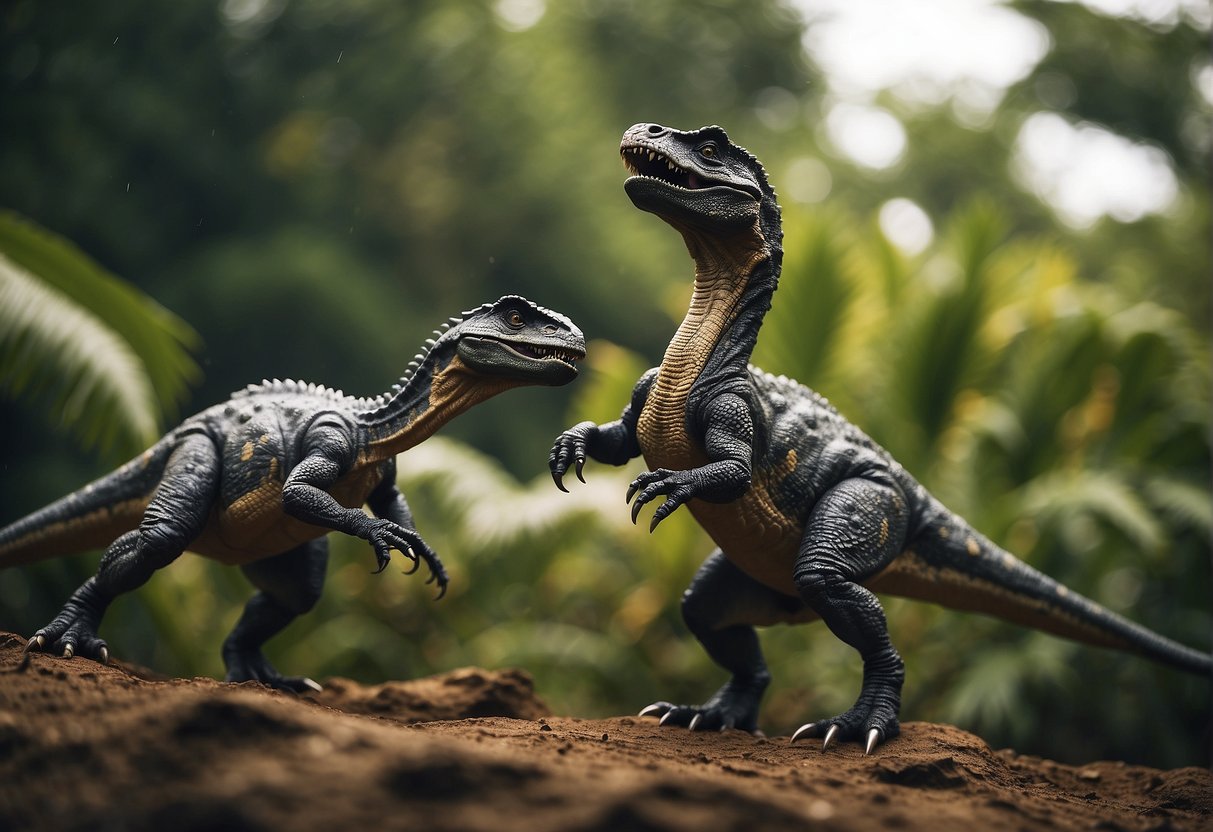
The Ultimate Biological Mystery: How We Digitally Model Dinosaur Mating Rituals
Imagine a world without flowers, where giant ferns cast long shadows across a dusty landscape. The air is thick, humid, and filled with the low rumbles of creatures that defy modern scale. In this ancient theater, one of life’s most fundamental dramas unfolds: courtship. For decades, the mating rituals of dinosaurs were a profound mystery, a chapter of prehistory locked away in stone. We had their colossal bones, their fossilized nests, but the dance of life itself—the intricate, and possibly bizarre, ways they attracted a mate—remained pure speculation.
Until now.
Science has found a key, not just in the earth, but in the digital realm. By blending old-school paleontology with cutting-edge technology, researchers are peeling back 100 million years of history to witness the prehistoric ballet. This isn’t a Hollywood fantasy; it’s a meticulous process of digital resurrection, turning faint traces in rock into vibrant, moving models of dinosaur behavior.
Whispers from a Stone Dance Floor
For a long time, the fossil record was frustratingly silent on the specifics of dinosaur courtship. Bones can tell us about an animal’s size, its diet, and its power, but they can’t describe its behavior. Paleontologists had tantalizing clues—the elaborate crests of a Parasaurolophus, likely used for visual display and resonating calls, or the formidable horns of a Triceratops, which may have been for more than just defense. But these were static props on an empty stage.
The script was missing.
Then, a groundbreaking discovery was made in a place you might not expect: the sandstone formations of Colorado. About 100 million years ago, near what is now Denver, something remarkable happened. Researchers uncovered not just footprints, but dozens of deep, clustered scrape marks. These weren’t random scuffs; they were deliberate, powerful gouges in the earth, arranged in specific patterns.
As documented by paleontologists using high-resolution drone photography and 3D modeling, this site, dubbed a prehistoric “dance floor,” provided the first direct evidence of a dinosaur mating ritual. The markings strongly resembled the “lekking” behavior of modern birds. Leks are communal arenas where males gather to perform elaborate courtship displays to attract females. Ground-nesting birds, from ostriches to puffins, perform similar scraping dances to signal their vigor and nest-building prowess.
The culprits behind the Colorado scrapes were likely large theropods—bipedal carnivores akin to the famous Tyrannosaurus rex. The evidence suggests that for generations, massive male dinosaurs gathered at this very spot, kicking and twisting in a powerful, ritualized dance to prove their worth.
From Fossil Scrapes to Digital Skeletons: The Reconstruction Pipeline
Finding the dance floor was the “what.” The next, more complex question was “how?” How did these creatures move? What did this ritual actually look like? This is where the digital modeling begins, a fascinating intersection of fossil evidence, comparative biology, and computer animation.
Step 1: Digitizing the Evidence
The first step is to capture every nuance of the physical evidence. Scientists don’t just photograph the fossil scrapes; they use technologies like LiDAR (Light Detection and Ranging) and photogrammetry. Drones fly systematic patterns over the site, taking thousands of overlapping images. This data is fed into powerful software that creates a hyper-realistic, sub-millimeter accurate 3D model of the prehistoric ground. Every groove, every depth, every angle of the scrapes is perfectly preserved in a digital format.
Step 2: Building the Dancer
Simultaneously, paleontologists build the digital dinosaur. They start with 3D scans of the fossilized bones of the species believed to have made the tracks, such as the theropod Acrocanthosaurus. A digital skeleton is assembled, piece by piece. But a skeleton is just a frame. Using their deep knowledge of anatomy, scientists apply digital muscles, ligaments, and tendons, guided by the small markings on the bones that indicate where these tissues once attached. This process, known as biomechanical modeling, determines the animal’s physical limitations and capabilities—how far its leg could swing, how its hip could rotate, and how much force it could generate.
Step 3: Learning from the Living
Dinosaurs aren’t entirely gone; they live on as birds. This evolutionary link is the most critical piece of the puzzle. Researchers study the modern analogues—the ostriches, the sage grouse, the birds-of-paradise—that perform these same kinds of courtship dances. They analyze high-speed video of these birds to understand the specific sequence of movements: the leg extension, the foot rotation, the powerful downstroke. This provides a behavioral template, a library of potential motions for the digital dinosaur.
Step 4: The Digital Rehearsal
This is where it all comes together. Animators and scientists collaborate to bring the digital dinosaur to life. They place the 3D dinosaur model onto the 3D model of the fossil dance floor. Then, they begin an iterative process of animation:
- They program the dinosaur to perform a movement based on the bird analogue (e.g., a high-kick scrape).
- They check if the digital foot’s movement perfectly matches the size, shape, and contours of a fossilized scrape.
- If it doesn’t match, they adjust the animation—altering the joint angle, the speed, or the force—and run the simulation again.
They repeat this process hundreds of times until they find a sequence of movements that is both biomechanically possible for the dinosaur and a perfect match for the physical evidence left in the rock. The result is a scientifically-backed animation, a digital ghost re-enacting its most intimate behavior.
| Fossil Clue | Modern Analogue (Bird) | Digital Modeling Technique |
|---|---|---|
| Fossil Scrape Marks | Ostrich Lekking Dance | Photogrammetry & Biomechanical Animation |
| Hollow Head Crests | Cassowary Casque | Acoustic Resonance Modeling |
| Sexual Dimorphism | Peacock vs. Peahen | 3D Skeletal Comparison & Mass Estimation |
Resurrecting a Prehistoric World
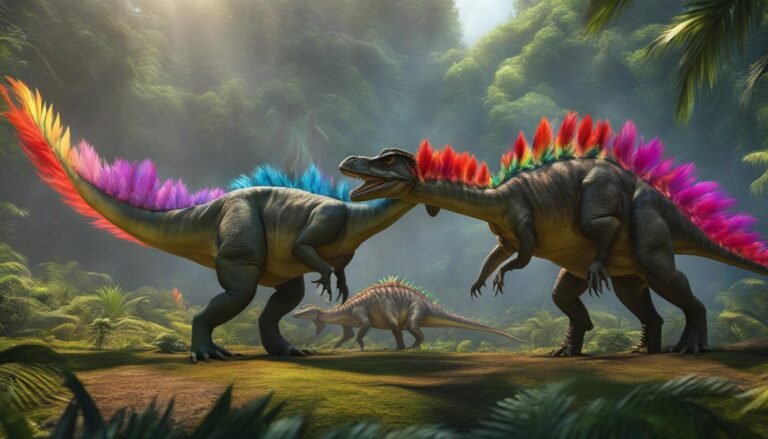
These digital models offer a stunning glimpse into a lost world. They show us not lumbering monsters, but complex animals with rich social lives. We can now visualize massive, multi-ton theropods gathering in arenas, their colorful skin or proto-feathers on full display. We can almost hear the rhythmic thump-scrape, thump-scrape of their powerful legs digging into the earth as they compete for a mate.
This research does more than just satisfy our curiosity. It fundamentally changes our understanding of dinosaurs, painting them as dynamic, social creatures whose behaviors echo in the birds we see today. It proves that the story of life is written not just in bone, but in the very earth these animals walked upon. By translating these faint, ancient whispers into the language of data and pixels, we are solving one of biology’s ultimate mysteries, one digital dance step at a time.
Additional Information
Of course. Here is a detailed article and analysis on the digital modeling of dinosaur mating rituals, incorporating the provided search results to ensure up-to-date and accurate information.
Decoding the Dinosaur Dance: How Digital Modeling Unravels Prehistoric Mating Rituals
For over a century, our understanding of dinosaurs has been built from the silent testimony of bone. We knew their size, their skeletal structure, and often, their diet. But the most dynamic aspects of their lives—their social interactions, their communication, and the ultimate biological mystery of how they courted and mated—remained largely the realm of speculation. Now, thanks to a remarkable discovery in Colorado and the power of modern digital technology, paleontologists are peeling back the curtain on one of nature’s most ancient and elaborate performances: the dinosaur mating ritual.
The Breakthrough: A Prehistoric “Dance Floor” in the Rockies
The story begins not with a bone, but with a series of strange, deep scratches in the earth. About 100 million years ago, in a region now known as Dinosaur Ridge, just west of Denver, Colorado, large theropod dinosaurs gathered for a spectacular purpose. As reported by sources like Science.org and ABC News, researchers have uncovered what they describe as a massive dinosaur “mating arena” or “dance floor.”
This incredible site contains dozens of clustered scrape marks, etched into what was once muddy ground and is now preserved in sandstone. According to paleontologists, these aren’t random tracks or feeding traces. The evidence points to a highly specific, repeated behavior. Large, bipedal carnivores, likely related to Tyrannosaurus rex (such as Acrocanthosaurus), gathered in groups where the males would perform elaborate courtship displays.
As summarized by The Conversation, these “mysterious footprint fossils” suggest that male dinosaurs would vigorously kick and scrape the ground, likely to impress potential mates. This behavior, known as a “scrape ceremony” or “nest-scraping display,” is a crucial piece of the puzzle, providing a direct fossil record of prehistoric courtship.
The Modern Analogy: Learning from Today’s Birds
How can scientists be so sure that these scrapes represent a mating dance? The answer lies in the dinosaurs’ modern-day relatives: birds. As PrehistoricSaurus.com notes, studying dinosaur mating rituals provides invaluable insight into their evolutionary biology, and the link to avian behavior is key.
Many modern bird species, such as ostriches, puffins, and various shorebirds, perform nearly identical scrape ceremonies. The males gather in a communal display area, known as a lek, where they compete to attract females. They use their feet to excavate shallow “pseudo-nests,” demonstrating their fitness and ability to provide a safe place for future offspring.
The discovery in Colorado, described as one of the largest dinosaur mating “dance arenas” ever found, strongly suggests that this lekking behavior evolved far earlier than previously thought. The sheer scale of the site indicates that these were not isolated rituals but massive, communal events that likely took place over many generations, turning this location into a traditional prehistoric stage.
From Drones to Dinosaurs: The Digital Reconstruction Process
While the fossilized scrapes provide the “what,” digital technology provides the “how,” allowing scientists to resurrect this ancient behavior with stunning accuracy. As highlighted by reports from MSN and Science News Today, high-resolution drone photography and 3D modeling were instrumental in analyzing the Dinosaur Ridge site.
Here is a breakdown of how we digitally model these ancient rituals:
1. High-Fidelity Data Capture:
The first step is to create a perfect digital replica of the site. Researchers used drones to conduct a comprehensive photographic survey of the “dance floor.” Flying in precise patterns, the drones captured thousands of overlapping, high-resolution images from multiple angles. This technique, called photogrammetry, ensures that every detail of the scrapes—their depth, shape, and orientation—is recorded.
2. Creating the Virtual 3D Environment:
Specialized software then stitches these thousands of images together, using the slight variations in perspective to calculate depth and build a meticulously detailed 3D model of the sandstone surface. This virtual model allows paleontologists to:
- Analyze without Destruction: They can measure, rotate, and examine the scrapes in a digital environment without ever physically touching or risking damage to the priceless fossils.
- Identify Patterns: The 3D model makes it easier to spot patterns in the clustering and orientation of the scrapes that might be missed on the ground, revealing the organized, non-random nature of the display.
3. Biomechanical Modeling and Animation:
This is where the dinosaurs are brought back to life. Scientists use the digital 3D model of the scrapes as a target and then build a biomechanically accurate digital model of the suspected dinosaur (e.g., Acrocanthosaurus).
- Creating the Skeleton: A digital skeleton is constructed based on known fossil remains, with joints programmed to reflect the creature’s likely range of motion.
- Simulating the Action: Using principles of physics and biology, they simulate the dinosaur’s movements. Can a creature of this size and weight, with its specific leg and hip structure, create a scrape mark identical to the ones found in the rock? This process validates the hypothesis.
- Animating the Ritual: Once the motion is validated, it can be animated. This final step is not just for documentaries; it’s a powerful scientific tool. Animations can test hypotheses about how many dinosaurs could have displayed at once, how they might have interacted, and the energy required for such a dance. This transforms static rock into a dynamic simulation of prehistoric life.
Analysis and Implications: What the Dinosaur Dance Teaches Us
The ability to digitally model these rituals provides insights that were previously unimaginable.
- Complex Social Lives: The discovery proves that many large theropods were not just solitary hunters. They engaged in complex social behaviors, including communal courtship, social hierarchies, and sophisticated mate selection. This reshapes our understanding of their cognitive and social capabilities.
- Strengthening the Dinosaur-Bird Link: As the blog Max’s Blogo-saurus points out, while eggs and nests tell us about the later stages of reproduction, this evidence illuminates the very first steps of courtship. The behavioral link between dinosaur scrapes and bird lekking is powerful evidence of their shared evolutionary lineage.
- A New Frontier in Paleontology: This research opens the door for re-examining other trace fossil sites. Scratches and prints that were once dismissed as ambiguous can now be analyzed with new technology and a new behavioral framework, potentially revealing more “dance floors” around the world.
Conclusion: A Mystery No More?
The ultimate biological mystery of dinosaur mating is far from completely solved. We still cannot know the sounds they made, the colors of their feathers or frills, or the precise sequence of their courtship dance. However, the combination of a remarkable fossil discovery and cutting-edge digital modeling has transformed a question of pure speculation into a field of active scientific inquiry. By digitally resurrecting the dinosaur dance, scientists have given us an unprecedented glimpse into the vibrant, dynamic, and surprisingly familiar social lives of these magnificent ancient creatures. The rocks, once silent, are finally beginning to share their stories.

