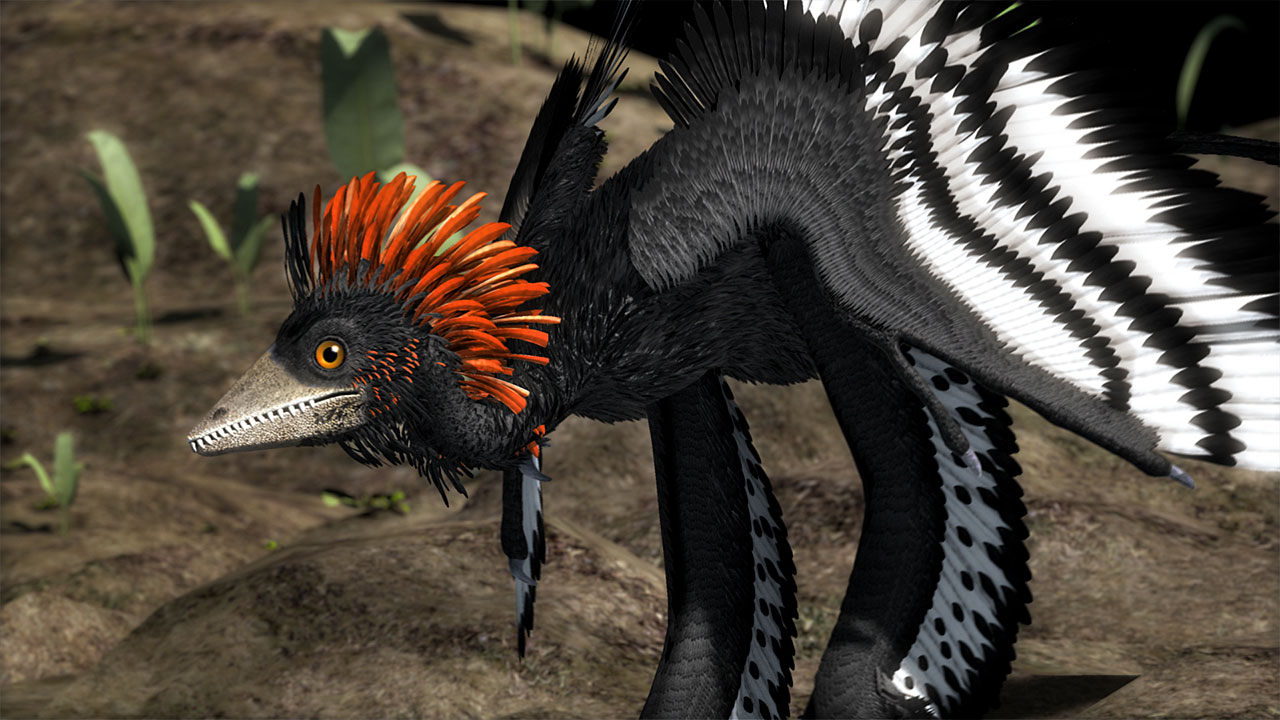

The Physics of Flight: A Digital Look at How Feathered Dinosaurs Took to the Skies
Long before the first airplane defied gravity, nature had already solved the complex physics of flight. The story, however, doesn’t begin with birds. It begins with their ancestors: the dinosaurs. For decades, we pictured these creatures as earth-bound titans. But a revolution in paleontology, fueled by incredible fossil discoveries and powerful digital technology, has painted a new picture. We now see a world where feathered dinosaurs leaped, glided, and eventually flapped their way into a new domain—the sky. This is the story of that transition, a tale written in bone, feather, and the fundamental laws of physics.
The Feathered Prerequisite: Not Just for Flight
The journey to the skies begins with a single, crucial innovation: the feather. Yet, for millions of years, feathers had nothing to do with flight. Early feathers, found on a vast array of dinosaurs, were likely simple, filament-like structures. Their purpose was terrestrial, not aerial.
- Insulation: Like a downy coat, early feathers helped regulate body temperature.
- Display: Elaborate plumes and vibrant colors could have been used in mating rituals or for species recognition, much like a peacock’s tail today.
- Camouflage: Mottled patterns could help a predator or prey blend into its surroundings.
The evolution from a simple filament to a complex flight feather was a masterpiece of biological engineering. Recent fossil analysis reveals that the very proteins that make up feathers—keratins—changed over time. As flightless dinosaurs evolved into flying ones, these proteins became lighter and more flexible. This molecular shift was the key that unlocked the feather’s aerodynamic potential, transforming it from a simple covering into a sophisticated airfoil. Scientists can now even distinguish between “flying feathers” and “non-flying feathers” in the fossil record, noting the crucial asymmetrical vane shape that is a hallmark of flight.
The Aerodynamic Blueprint: Building a Flying Machine
Taking to the air isn’t as simple as strapping on feathers. It requires a complete anatomical overhaul, a redesign of the body to master the principles of lift, thrust, and control.
The Great Debate: Ground-Up or Trees-Down?
How did dinosaurs make that first leap? Scientists have long debated two primary theories:
- Arboreal (“Trees-Down”): This theory suggests small, feathered dinosaurs living in trees used their plumage to first parachute, then glide from branch to branch to escape predators or ambush prey. Over generations, this gliding would evolve into powered, flapping flight. The four-winged Microraptor is the poster child for this model.
- Cursorial (“Ground-Up”): This hypothesis posits that fast-running terrestrial dinosaurs used their feathered arms for added stability and lift. One compelling version of this is Wing-Assisted Incline Running (WAIR), where flapping provides traction to help an animal run up steep surfaces like trees or cliffs—a behavior seen in modern partridge chicks.
The truth is likely a combination of both. Flight wasn’t a single event but an evolutionary exploration of what was possible, with different species experimenting with different aerial abilities.
Anatomy of a Proto-Flier
To fly, an animal must overcome its own weight (gravity) with an upward force (lift) and propel itself forward (thrust) against the resistance of the air (drag). Feathered dinosaurs evolved a suite of adaptations to solve this equation:
- Hollow Bones: A lightweight skeleton is essential. Like birds, many theropod dinosaurs had pneumatic bones, filled with air sacs, reducing weight without sacrificing strength.
- The Wishbone: The furcula, or wishbone, acted as a strong, flexible spring, storing and releasing energy with each wing beat and providing a solid anchor for powerful flight muscles.
- The Asymmetrical Wing: A feather shaped for flight is not symmetrical. It has a shorter, stiffer leading edge and a longer, more flexible trailing edge. This airfoil shape forces air to travel faster over the top surface than the bottom, creating a pressure difference that generates lift.
- Power and Control: A long, bony tail tipped with a fan of feathers, like that of Archaeopteryx, would have provided crucial stability and steering, acting like the rudder and elevators of an airplane.
Mesozoic Flight School: A Look at the Pioneers
The fossil record gives us a glimpse into the diverse “flight school” of the Mesozoic era, where different dinosaurs adopted unique aerial strategies.
| Dinosaur Pioneer | Key Feature | Hypothesized Flight Style | Core Physics Principle |
|---|---|---|---|
| Archaeopteryx | Asymmetrical wings, long tail | Weak Flapper/Glider | Lift Generation |
| Microraptor | Four wings (arms & legs) | Glider / Parachuter | Stability & Drag Control |
| Yi qi | Bat-like membrane wings | Glider | High-Lift Airfoil |
| Velociraptor | Symmetrical arm feathers | Non-Flier | Insulation / Display |
Case Study: Microraptor, The Four-Winged Daredevil
Perhaps no fossil better illustrates the experimental nature of dinosaur flight than Microraptor. This small dromaeosaur from the Cretaceous period possessed not two, but four wings—long, asymmetrical flight feathers on both its arms and its legs. This “biplane” configuration has fascinated and puzzled scientists.
Using digital models and wind tunnels, researchers have tested how Microraptor might have flown. The leg-wings likely weren’t for flapping but played a crucial role in controlling pitch and generating extra lift. By changing the position of its legs, Microraptor could have executed sharp turns or controlled its descent, making it a highly maneuverable glider perfectly adapted for life in the dense forests of ancient China.
A Single Leap or Many Jumps?
Did powered flight evolve just once, leading directly to modern birds? Or was the sky a frontier conquered multiple times by different dinosaur groups? The latest research suggests the answer is complex.
Evidence now points to a single evolutionary origin for the specific type of powered flight seen in the lineage that led to birds. This implies that a very specific “toolkit” of anatomical and feather-related traits had to come together perfectly. However, this doesn’t mean other dinosaurs weren’t airborne. It appears the broader category of “aerial locomotion”—including parachuting and gliding—evolved multiple times. Dinosaurs like Microraptor and the bizarre, bat-winged Yi qi were successful but ultimately separate experiments in taking to the air. They were evolutionary side-branches, not direct ancestors of birds.
The Digital Reconstruction: Breathing Life into Fossils
Our understanding of this ancient transition is accelerating thanks to modern technology. Paleontologists are no longer limited to calipers and sketchpads.
- CT Scanning: High-resolution CT scanners allow scientists to digitally “dissect” fragile fossils, revealing internal bone structures and brain cavities without ever touching a drill.
- Computational Fluid Dynamics (CFD): This is the same software used to design jets and race cars. By creating a 3D model of a dinosaur like Microraptor and placing it in a virtual wind tunnel, researchers can simulate airflow over its body to calculate lift, drag, and stability, testing different flight postures and wing movements.
- 3D Modeling: These digital blueprints allow for the creation of physical models and robots that can replicate flapping or gliding motions, providing real-world tests of fossil-based hypotheses.
Through this digital lens, the static bones of the past are animated. We can watch a Microraptor glide between virtual trees and analyze the forces acting on an Archaeopteryx’s wing. The physics of flight, once a purely theoretical field for paleontologists, has become an experimental science.
The story of how dinosaurs took to the skies is a profound example of evolutionary innovation. It was a gradual, messy, and ultimately spectacular process. It began with a simple filament, evolved through countless small adaptations in bone and protein, and was tested across millions of years in a relentless pursuit of the skies. As our digital window into this prehistoric world grows clearer, we gain a deeper appreciation for the incredible physical journey that turned ground-dwelling dinosaurs into the masters of the air.

Additional Information
Of course. Here is a detailed article and analysis on the physics of dinosaur flight, incorporating the latest research and digital methodologies based on the provided search results.
Taking Wing: A Digital Deep Dive into the Physics of Dinosaur Flight
For over a century, the image of dinosaurs was one of terrestrial, scaly giants. But modern paleontology, supercharged by digital technology and remarkable fossil discoveries, has painted a far more dynamic picture: one of feathered, agile creatures, some of which made the monumental evolutionary leap into the sky. Understanding how these dinosaurs took flight is not just a matter of finding fossils with feathers; it’s a journey into the complex physics of aerodynamics, a story now being told with unprecedented detail through digital modeling, molecular analysis, and biomechanical simulation.
The transition from land to air was not a single event but a gradual, multifaceted process. It involved profound changes at every level, from the molecular composition of feathers to the skeletal architecture of the entire animal.
1. The Feather: A Molecular and Aerodynamic Marvel
Before any dinosaur could fly, it needed the right equipment. While we now know many dinosaurs had feathers, most could not fly. As several sources highlight, feathers initially evolved for other purposes, such as insulation, camouflage, or elaborate courtship displays. The journey to an flight-capable feather was a masterpiece of evolutionary engineering.
-
From Down to Dynamo: Early feathers were likely simple, downy filaments. The critical innovation for flight was the pennaceous feather: a feather with a strong central shaft (rachis) and interlocking, asymmetrical vanes. This asymmetry is key. Like an airplane wing, the leading edge is thicker and more curved, while the trailing edge is thinner. This airfoil shape is fundamental to generating lift.
-
A Digital Look at Molecular Evolution: Recent groundbreaking research, detailed in Science, has del天ve into the very proteins that make up feathers. By analyzing fossilized feathers, scientists have discovered how the key proteins—beta-keratins—evolved. Over time, these proteins became lighter and more flexible. This molecular shift was crucial. Stiff, heavy feathers would be a liability, but the evolution of lightweight, resilient, and flexible keratins allowed the wings to deform and reform with each flap, maximizing thrust and lift while minimizing the risk of damage. This isn’t just speculation; it’s evidence gleaned from the molecular ghosts left behind in stone.
2. The Airframe: Building a Flying Machine
A flight-ready feather is useless without a body built to utilize it. The evolution of avian flight required a radical redesign of the dinosaurian body plan to solve the fundamental problem of physics: overcoming gravity.
- Weight Reduction: The first rule of flight is to be as light as possible. Theropod dinosaurs on the line to birds evolved hollow, air-filled bones, a feature known as pneumaticity. This created a strong but lightweight skeleton.
- A Powerful Engine: Powered flight requires immense muscular strength. This led to the evolution of a large, keeled sternum (breastbone) to anchor powerful flight muscles. The clavicles fused to form the furcula, or wishbone, which acts like a spring, storing and releasing energy with each wing beat.
- Redesigned Landing Gear and Control: The shoulder joint was reoriented to allow for a vertical flapping motion, essential for generating thrust, rather than just a forward-and-back motion used for grasping. This powerful downstroke is what separates true fliers from simple gliders.
3. The Great Debate: One Evolutionary Leap or Many?
How many times did dinosaurs evolve flight? This is a central and fascinating debate in paleontology, with recent findings supporting different conclusions.
-
The Single Origin Hypothesis: As one study from SciTechDaily suggests, true powered flight may have evolved only once among dinosaurs, within the lineage known as Avialae, which includes modern birds and their closest fossil relatives like Archaeopteryx. According to this “hidden rule for flight feathers,” while many dinosaurs like the Microraptor had impressive feathers and could likely glide or parachute from trees, they may not have possessed the specific biomechanics for sustained, powered flapping.
-
The Multiple Experiments Hypothesis: Conversely, other evidence suggests that nature experimented with flight multiple times. The existence of creatures like the four-winged Microraptor points to a more complex picture. This dromaeosaur, often showcased in digital reconstructions, was not on the direct ancestral line to birds but clearly engaged in some form of aerial locomotion. Digital analyses of Microraptor fossils have tested various flight models, from a “biplane” configuration to a swooping glide, suggesting it was a capable aerialist in its own right. This supports the idea that different groups of maniraptoran dinosaurs independently developed ways to get airborne, even if most of these experiments were evolutionary dead ends.
This ongoing debate highlights how new fossils, like the one recently reported in Forbes, continue to add crucial data points, refining our understanding of these transitional phases.
4. Digital Paleontology: Reconstructing Prehistoric Skies
This is where the “digital look” comes into sharp focus. We can no longer just look at a fossil; we can bring it to life.
-
Computational Fluid Dynamics (CFD): Scientists digitally scan fossils to create high-resolution 3D models of animals like Archaeopteryx or Microraptor. They can then place these virtual models in a simulated wind tunnel. By running CFD simulations, they can precisely calculate the lift and drag generated by different wing shapes and body postures, testing which were aerodynamically viable.
-
Biomechanical Modeling: These digital models can be given virtual muscles and joints to simulate flapping motions. This helps researchers determine the power requirements for flight and assess whether a dinosaur’s skeletal structure could have supported the necessary musculature. For instance, analysis of Microraptor‘s four-winged setup explores how it might have used its leg-wings for steering or stability—questions impossible to answer from bones alone.
-
Case Study: The Microraptor‘s Aerial Mastery: As seen in video reconstructions, the Microraptor is a prime example of digital analysis in action. Its four-winged anatomy was an evolutionary puzzle. Digital models have allowed scientists to test its flight capabilities, suggesting it was a proficient glider, capable of launching from trees and maneuvering through the Cretaceous forests. While it may not have achieved true powered flight like a modern bird, its “aerial mastery” was a remarkable example of convergent evolution.
Conclusion: An Unfolding Story
The physics of how feathered dinosaurs took to the skies is a story of incremental adaptation, where a confluence of factors—lighter proteins, hollow bones, asymmetrical feathers, and powerful muscles—came together. The once-clear line between “dinosaur” and “bird” has been blurred into a fascinating continuum of gliders, parachuters, and flappers.
Digital tools have transformed this field from one of static interpretation to dynamic experimentation. We can now test hypotheses about flight mechanics and evolutionary pathways with a rigor previously unimaginable. The debate over single versus multiple origins of flight rages on, fueled by each new fossil and every refined simulation. What is certain is that the journey to the skies was not a simple step, but a complex dance between genetics, anatomy, and the unyielding laws of physics.

