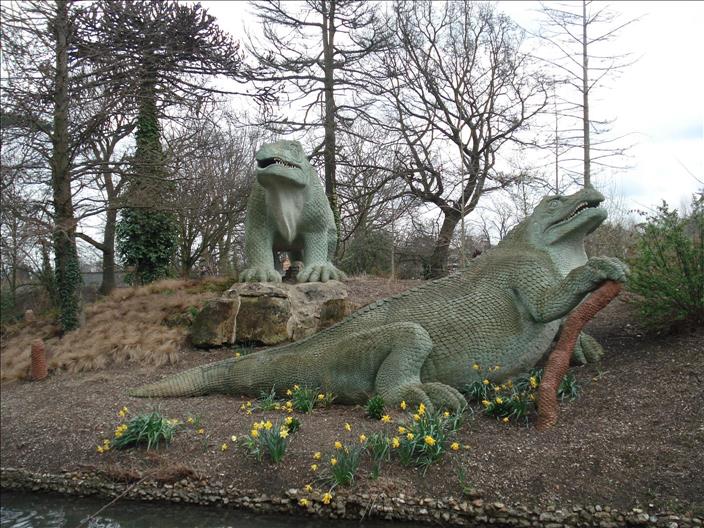
For over a century, our collective image of the Mesozoic Era has been dominated by the flickering projections of Hollywood and the static poses of museum displays. We have been conditioned to view dinosaurs as lumbering, dim-witted, scaly monsters that existed in a perpetual state of grey-brown gloom. However, as we step into 2026, the field of paleontology is experiencing a golden age of discovery. Advanced imaging technology, synchrotron radiation, and the analysis of exceptionally preserved soft tissues have allowed scientists to peel back the layers of deep time.
The reality uncovered by modern researchers is far more vibrant, complex, and unexpected than anything previously imagined. We are no longer looking at simple reptilian caricatures, but at highly evolved, biologically sophisticated animals that challenge our very definitions of what it means to be a dinosaur. In this comprehensive guide, we are busting five of the most persistent dinosaur myths that have finally been shattered by the relentless march of scientific progress.
Myth 1: Dinosaurs Were All Cold-Blooded, Slow-Moving Reptiles

For decades, the prevailing narrative suggested that because dinosaurs were closely related to crocodiles and lizards, they must have been ectothermic, or cold-blooded. This implied that they were sluggish animals, dependent on the sun to regulate their body temperature, and incapable of sustained high-energy activity. By 2026, isotopic analysis of fossilized tooth enamel has provided a definitive answer: most dinosaurs were mesothermic or endothermic.
Research published in the last two years indicates that many dinosaur groups, particularly the theropods and ornithopods, maintained internal body temperatures independent of their environment. This internal metabolic engine allowed them to grow at rates comparable to modern mammals and birds. The idea of the slow, swamp-dwelling giant has been replaced by the reality of the high-octane, active athlete. We now understand that dinosaurs occupied diverse ecological niches, requiring a metabolic flexibility that allowed them to thrive in climates ranging from the sweltering tropics to the snowy forests of the polar regions.
Myth 2: Dinosaurs Were Muted, Earth-Toned Creatures

The “Jurassic Park” aesthetic of drab greens, browns, and greys has been one of the hardest myths to shake. For a long time, paleoart relied on the assumption that prehistoric animals mimicked the colors of modern reptiles to blend into their surroundings. However, thanks to the study of melanosomes—microscopic structures that hold pigment—within fossilized feathers and skin, we can now reconstruct the actual coloration of several dinosaur species with high confidence.
As of 2026, we know that dinosaurs were not just colorful; they were potentially flamboyant. Species like Sinosauropteryx sported distinct reddish-brown stripes along their tails and a masked face pattern, likely used for intraspecific signaling. Others, such as Microraptor, possessed iridescent, glossy black feathers that would have shimmered in the sunlight, similar to the plumage of a modern crow or starling. This discovery implies that visual communication was a cornerstone of dinosaur behavior, suggesting complex social hierarchies and mating displays that were previously invisible to the scientific community.
Myth 3: The T-Rex Was a Mindless, Scavenging Monster

The depiction of Tyrannosaurus rex as a bumbling scavenger or a mindless killing machine has been systematically dismantled by biomechanical modeling and neurobiology. By 2026, we have a much clearer picture of the king of the dinosaurs. High-resolution CT scans of T. rex endocasts—the internal space of the skull—reveal that they possessed a highly developed olfactory bulb and sensory region, suggesting that they had an acute sense of smell and sophisticated spatial awareness.
Far from being a scavenger, the T. rex was an apex predator with a bite force estimated at over 12,000 pounds per square inch. Furthermore, evidence suggests that these massive carnivores were likely social animals. Fossil trackways and bone beds containing multiple individuals of varying ages indicate that they may have hunted in packs or at least exhibited complex family structures. This shift in perception moves the T. rex from the category of “monster” to that of a highly intelligent, apex strategist that occupied the top of the food chain for millions of years.
Myth 4: Dinosaurs Were Completely Extinct 66 Million Years Ago
Perhaps the most pervasive myth is that the “Great Dying” at the end of the Cretaceous Period wiped out every single dinosaur. While it is true that the non-avian dinosaurs perished following the Chicxulub asteroid impact, the phylogenetic reality is that dinosaurs never truly vanished. In modern biology, birds are classified as avian dinosaurs, a conclusion that has been cemented by overwhelming genetic and anatomical evidence.
When we look at a pigeon or a hawk, we are looking at a direct descendant of small, feathered theropods. The anatomical similarities—ranging from the structure of the wishbone and the hollow, lightweight bones to the presence of feathers and the way they lay eggs—are undeniable. By 2026, the scientific consensus is clear: the dinosaur lineage survived the extinction event. We are currently living in the midst of a dinosaur-dominated era, with over 10,000 species of birds representing the living legacy of the most successful group of terrestrial vertebrates in Earth’s history.
Myth 5: Dinosaurs Were Silent, Only Capable of Hissing or Roaring
Cinema has taught us that dinosaurs communicated through earth-shaking roars and terrifying hisses. However, comparative anatomy suggests a completely different auditory landscape. Because many dinosaurs were closely related to birds, it is highly probable that they utilized vocalizations similar to those of our modern avian friends. This means that instead of a deep, guttural roar, many dinosaurs likely produced complex chirps, coos, booms, or resonant, closed-mouth vocalizations.
Research into the evolution of the syrinx and the anatomy of the throat suggests that large dinosaurs may have utilized throat sacs to create booming, low-frequency sounds that could travel for miles across the prehistoric landscape. This “dinosaur soundscape” would have been far more nuanced than the cinematic roar, functioning as a sophisticated system for territorial defense, mating calls, and social coordination. The silence of the fossil record is finally being filled with the sounds of a biological symphony.
Frequently Asked Questions
Did all dinosaurs have feathers?
Not necessarily. While feathers or feather-like structures (proto-feathers) were widespread among theropods and some ornithischians, current evidence suggests that larger dinosaurs, such as some sauropods, may have had scaly skin to help dissipate heat. It is likely that dinosaurs displayed a mosaic of skin coverings depending on their size, climate, and evolutionary lineage.
How do we know the colors of dinosaurs if they are fossils?
Scientists analyze fossilized skin and feathers for microscopic structures called melanosomes. By comparing the shape and density of these structures to those found in modern birds, researchers can infer the original pigments, allowing for accurate color reconstructions.
Were dinosaurs smarter than we thought?
Yes. The study of dinosaur endocasts reveals that many species had brain-to-body mass ratios comparable to modern birds and crocodiles. This suggests that they were capable of complex behaviors, including social coordination, parental care, and advanced problem-solving, rather than acting purely on instinct.
Are there still dinosaurs being discovered today?
Absolutely. Paleontologists describe dozens of new dinosaur species every year. With the use of satellite imagery, ground-penetrating radar, and international collaborations, we are uncovering more about the Mesozoic world at a faster rate than ever before in history.
Conclusion
The myths we once held about dinosaurs were born from a lack of data and the limitations of our own imaginations. As we move further into 2026, the “5 Dinosaur Myths Busted by Recent Scientific Finds” serve as a reminder that science is an iterative process. We have learned that these creatures were not the scaly, sluggish, and monochromatic monsters of our childhood nightmares, but a vibrant, intelligent, and diverse group of animals that effectively still walk among us today. By continuing to challenge our assumptions and embracing the evidence provided by the fossil record, we ensure that the story of the dinosaurs remains as dynamic and awe-inspiring as the creatures themselves.
Tags: paleontology, dinosaurs, science, evolution, prehistoric life
Category: Science and Nature
