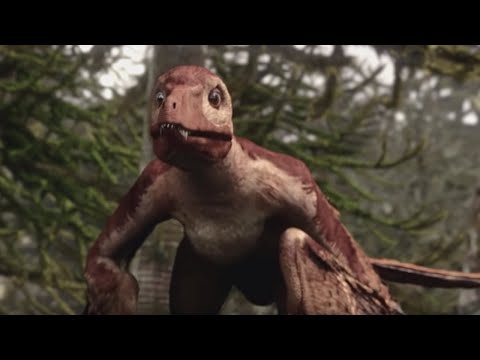
When you look up at a pigeon perched on a city ledge or watch an eagle soar above a mountain range, you are witnessing a biological miracle that spans millions of years. For generations, the scientific community debated the lineage of these avian masters, but as of 2026, the verdict is absolute: birds are not merely related to dinosaurs; they are living, breathing descendants of a specific lineage of theropod dinosaurs. This realization has transformed our understanding of evolutionary biology, shifting from a view of dinosaurs as lumbering, extinct beasts to an intricate, vibrant lineage that survives in every backyard, forest, and sky on Earth.
The transition from the massive, earth-shaking predators of the Cretaceous period to the delicate songbirds of the modern era is one of the most well-documented evolutionary tales in history. With the integration of advanced genomic sequencing, high-resolution 3D fossil scanning, and the discovery of thousands of new specimens across the globe, we can now map this transition with unprecedented clarity. The question is no longer “Are birds dinosaurs?” but rather “How did these dinosaurs become the masters of the air?”
The Genomic Blueprint: Decoding the Dinosaur Within
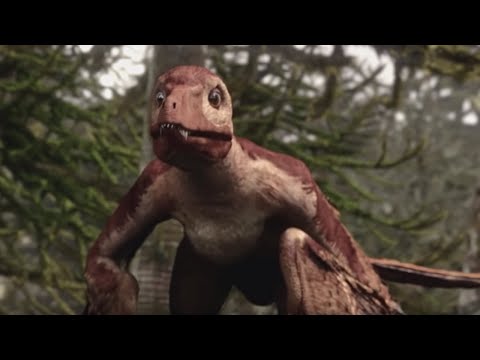
One of the most significant breakthroughs of the mid-2020s has been the application of paleogenomics to avian evolution. While ancient DNA is rarely preserved in fossils millions of years old, researchers are now using the genomes of modern birds—specifically the chicken (Gallus gallus) and the ostrich (Struthio camelus)—as genetic time machines. By comparing these genomes to those of modern crocodilians, the closest living relatives of both birds and dinosaurs, scientists have reconstructed the ancestral archosaur genome.
In 2025, researchers identified a specific set of Hox genes that regulate limb development in birds, which are virtually identical to those found in the fossilized remains of small theropods. This genetic continuity proves that the transition was not a sudden “mutation” but a gradual process of repurposing existing biological structures. We now know that the avian respiratory system, characterized by unidirectional airflow and air sacs, was already present in dinosaurs like Allosaurus. These biological features, which once helped dinosaurs survive in low-oxygen environments during the Triassic, became the engine that powers the high-metabolic demands of flight in birds today.
Feathers: Beyond the Concept of Flight

For decades, the presence of feathers was the primary barrier for those skeptical of the bird-dinosaur link. The misconception that feathers were exclusively for flight has been shattered by the Liaoning fossil discoveries and subsequent finds in the Patagonian region. By 2026, we have identified that at least 65 percent of all known non-avian theropod species possessed some form of integumentary structures, ranging from simple, hair-like “proto-feathers” to complex, asymmetrical flight feathers.
The evolutionary purpose of these early feathers was likely thermoregulation and sexual display rather than aerodynamics. Detailed microscopic analysis of melanosomes—the pigment-containing organelles preserved in fossil feathers—has allowed scientists to reconstruct the exact colors of dinosaurs. We now know that Sinosauropteryx likely sported a reddish-brown, striped tail, while Microraptor shimmered with an iridescent, crow-like sheen. This confirms that the vibrant displays of modern birds—the peacock’s tail or the hummingbird’s throat—are direct extensions of the decorative evolutionary pressures that acted upon their dinosaur ancestors.
The Shrinking Giant: Miniaturization and the Avian Transition

A persistent question in paleontology has been why birds are so small compared to their gargantuan ancestors. New research published in 2026 suggests that miniaturization was a deliberate evolutionary strategy that occurred over approximately 50 million years. This long-term trend of decreasing body size in the paravian lineage allowed these creatures to occupy ecological niches that were inaccessible to larger, heavier predators.
As these dinosaurs became smaller, their skeletons underwent radical changes. The fusion of the furcula (wishbone), the reduction of the tail into a pygostyle, and the development of a keeled sternum for muscle attachment were all architectural shifts required for the eventual shift from gliding to powered flight. This process was not a “bottleneck” but a highly successful radiation. By the time of the K-Pg extinction event 66 million years ago, the ancestors of modern birds were already small, feathered, and arboreal, which allowed them to survive the collapse of the food chain that wiped out the non-avian dinosaurs.
Digital Paleontology: Seeing the Unseen
The year 2026 marks the golden age of Synchrotron X-ray Tomography. This technology allows researchers to peer inside fossilized eggs and bones without damaging the specimens. We have successfully mapped the internal structures of Enantiornithes (a group of ancient toothed birds) and discovered that their brain development was remarkably similar to modern precocial birds, such as ducks or chickens.
These 3D models have revealed the vestigial structures that connect birds to their ancestors. For instance, we can now see the transition of the dinosaurian hand into the avian wing. The three fingers of a T-Rex are homologous to the three digits found in the wing of a modern bird. This digital revolution has effectively removed the “missing link” argument, as the fossil record now provides a smooth, continuous spectrum of transitional forms that bridge the gap between the ground-dwelling Velociraptor and the sparrow in your garden.
The Ecological Legacy: Dinosaurs in the Modern World
Recognizing birds as dinosaurs fundamentally changes how we categorize the extinction event of the Cretaceous. It is more accurate to say that the non-avian dinosaurs went extinct, while the avian dinosaurs survived and thrived. Today, there are over 11,000 species of birds, making them the most successful group of terrestrial vertebrates on the planet. Their survival is a testament to the versatility of the dinosaurian body plan.
Birds have inherited the dinosaurian metabolism, which is significantly faster than that of modern reptiles. This high-energy lifestyle requires the specialized feeding habits and social behaviors we see today. From the complex communication systems of parrots to the migratory feats of the Arctic tern, these behaviors are rooted in the social structures of dinosaurs. Recent studies of fossilized nesting sites suggest that dinosaurs like Maiasaura exhibited parental care and communal nesting, behaviors that are foundational to the success of modern avian species.
Frequently Asked Questions (FAQ)
1. If birds are dinosaurs, why don’t they look like them?
Over 150 million years of independent evolution have drastically reshaped the avian body. While they share the same skeletal foundation, birds have undergone extreme specialization for flight, including the loss of teeth, the fusion of bones for weight reduction, and the transformation of the forelimbs into wings. They are essentially highly derived, flight-adapted dinosaurs.
2. Did all dinosaurs have feathers?
Not all dinosaurs had feathers. We know that feathers were widespread among theropods (the group that includes T-Rex and raptors), but there is currently no evidence that large, herbivorous dinosaurs like Triceratops or Brachiosaurus had feathers. It is likely that feathers were a trait that evolved in the Coelurosauria lineage.
3. How do we know for sure that birds evolved from dinosaurs?
The evidence is overwhelming and comes from multiple, independent fields of study. We have thousands of transitional fossils showing the development of feathers and wings, genomic studies confirming shared DNA sequences, and embryological research showing how bird embryos grow structures that are identical to those of dinosaur ancestors.
4. Are modern birds still evolving?
Yes. Evolution is a continuous process. Birds are currently adapting to anthropogenic pressures, such as urbanization and climate change. We are observing rapid shifts in bill size, wing shape, and migratory timing in various species to better suit their changing environments.
Conclusion: The Eternal Flight
The journey from the dawn of the Mesozoic Era to the skies of 2026 is a narrative of resilience and adaptation. By accepting that birds are dinosaurs, we gain a deeper appreciation for the complexity of life. We are not living in a world devoid of dinosaurs; we are sharing our planet with the most successful branch of the dinosaur family tree. Every time you observe a bird, you are looking at a living connection to the deep past—a creature that has weathered mass extinctions, continental shifts, and the rise of mammals to become the feathered icons of our natural world. The “bird-dinosaur link” is not just a scientific fact; it is a bridge that connects us to the most spectacular era of Earth’s history, proving that even in the face of catastrophe, life finds a way to take flight.
Tags: paleontology, evolutionary biology, birds, dinosaurs, scientific discovery, 2026 science
Category: Science and Nature
