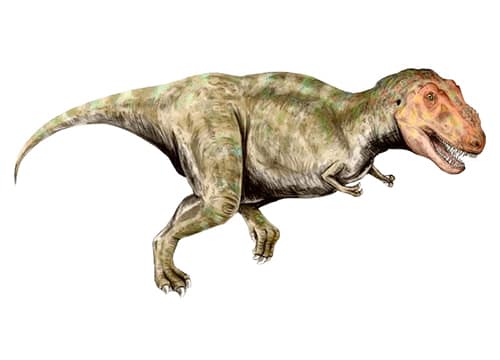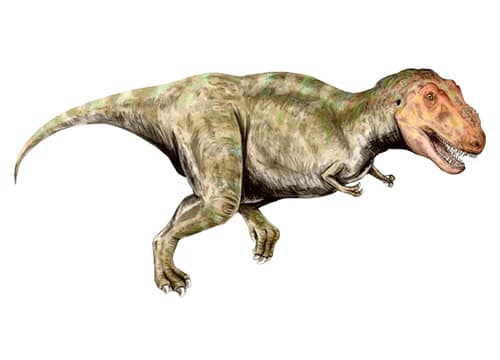

The 40-Year King: Unveiling the Slow-Burn Growth of Tyrannosaurus Rex
For decades, the Tyrannosaurus rex has been portrayed as the ultimate biological powerhouse—a creature that exploded from a hatchling to a multi-ton apex predator in a frantic race against time. However, groundbreaking biological data released in 2026 has fundamentally rewritten the biography of the “King of the Dinosaurs.” We now know that the path to the throne was not a sprint, but a marathon. New research reveals that T. rex took a staggering 40 years to reach its full adult size, painting a picture of a patient, long-lived monarch of the Cretaceous.
Rethinking the Rush to Adulthood
The previous consensus among paleontologists suggested that T. rex followed a “live fast, die young” strategy, reaching maturity in roughly 20 to 25 years. This rapid growth spurt was thought to be a biological necessity to survive in a world filled with rival predators.
However, an extensive study of 17 different tyrannosaur specimens—ranging from spindly juveniles to the massive, weathered skeletons of elders—has overturned this timeline. By analyzing the microstructure of bone tissue, researchers led by Holly Woodward and Jack Horner have concluded that the growth phase of T. rex was nearly double what we once believed. This 40-year journey to maximum size suggests a much more complex life history than previously imagined.
The Science of Growth Rings: Reading the Bones
The breakthrough comes from a field known as osteohistology. Much like the rings within a tree trunk, dinosaur bones contain “growth rings” that record the animal’s annual development. By examining the leg bones of these 17 specimens, scientists were able to reconstruct year-by-year growth histories.
The data showed that while T. rex did experience a period of accelerated growth during its teenage years, the curve flattened significantly as it aged. Rather than stopping at age 20, the “King” continued to add bulk and bone density for another two decades. This slow-and-steady progression allowed the animal to reach a final, staggering weight of roughly 8 tons, but only after it had navigated 40 years of survival.
Ecological Success Through Patience
Why would a predator take four decades to reach its full potential? According to co-author Jack Horner, a lecturer and presidential fellow at Chapman University, this extended growth phase was a strategic advantage rather than a developmental hurdle.
By growing slowly, younger T. rex individuals were able to fill a variety of ecological niches within their environments. A 10-year-old T. rex was a lean, fast-moving hunter that could pursue smaller, more agile prey. As it matured over the next 30 years, its physical capabilities shifted, eventually transitioning into the bone-crushing powerhouse we recognize as the adult form. This “multi-generational” presence meant that T. rex dominated the food chain at every stage of its life, effectively outcompeting other species by occupying multiple roles.
At a Glance: The Evolution of Our Understanding
| Feature | Old Scientific Consensus | New 2026 Biological Data |
|---|---|---|
| Years to Full Growth | 20–25 Years | 40 Years |
| Maximum Weight | ~6-7 Tons | ~8 Tons |
| Growth Strategy | Rapid Adolescent Spurt | Steady, Multi-Decade Expansion |
| Life Expectancy | ~28–30 Years | 40+ Years |
| Ecological Role | Single-Niche Apex Predator | Multi-Niche Generalist |
A Titan Refined: The Impact on Paleontology
This shift in data does more than just update a number in a textbook; it changes how we perceive the social structure and population dynamics of the Late Cretaceous. If T. rex lived longer and grew slower, it suggests a lower turnover rate in the population. These were not disposable predators; they were long-term fixtures of their ecosystems.
The 40-year growth phase also suggests that “Sue,” one of the most famous and complete T. rex specimens ever found, may have been much older than the 28 years previously estimated. This new biological clock forces us to re-evaluate the fossil record, looking at well-known specimens through the lens of a much longer, more arduous life cycle.
Conclusion: The Patient King
The image of the Tyrannosaurus rex as a frantic, fast-growing beast has been replaced by a more regal and enduring figure. The “40-Year King” was a creature of persistence, slowly accumulating its massive power over four decades. This new biological data reminds us that even for the most formidable predator to ever walk the Earth, greatness was a matter of time. The King did not just take the throne; he spent a lifetime earning it.

Additional Information
The 40-Year King: Redefining the Life History of Tyrannosaurus Rex
For decades, the Tyrannosaurus rex was characterized by a “live fast, die young” philosophy. Previous paleontological models suggested that the “King of Dinosaurs” underwent a massive adolescent growth spurt, reaching its terrifying adult size in roughly 20 years and rarely living past age 30.
However, a groundbreaking study published in January 2026—led by Dr. Holly Woodward of Oklahoma State University Center for Health Sciences and featuring legendary paleontologist Jack Horner—has fundamentally rewritten this timeline. By analyzing the most extensive dataset of T. rex fossils to date, researchers have revealed that the path to becoming an 8-ton apex predator was a much longer, steadier marathon lasting four decades.
1. The Methodology: Reading the “Tree Rings” of Giants
The study’s conclusions are rooted in paleohistology, the microscopic study of fossilized bone tissue. Just as a tree adds a ring for every year of growth, dinosaur bones preserve “lines of arrested growth” (LAGs).
- The Dataset: The research team examined 17 different specimens, ranging from small juveniles to the most massive known adults. This is the largest sample size ever used for a T. rex growth study, providing a high-resolution map of the species’ life cycle.
- The Findings: By counting these LAGs and analyzing the bone microstructure, the team discovered that T. rex continued to add significant mass well into its 30s, not reaching its maximum physiological “ceiling” until approximately age 40.
2. A Shift in Growth Dynamics
Previous studies (such as those based on the famous specimen “Sue”) suggested T. rex gained up to 1,500–2,000 pounds a year during its mid-teens, tapering off quickly by age 20. The new 2026 data suggests a more nuanced growth curve:
- Steady Maturation: Instead of a short-lived explosion in size, T. rex maintained a slower, more consistent growth rate over a longer duration.
- Extended Longevity: If T. rex took 40 years to reach full size, it implies that the species lived significantly longer than the 28–30 years previously estimated. This suggests a more robust metabolism and a different survival strategy than previously imagined.
3. Ecological Implications: The “Niche” Factor
Perhaps the most significant finding of the study involves how T. rex interacted with its environment. Co-author Jack Horner notes that a 40-year growth phase allowed younger tyrannosaurs to occupy diverse ecological roles.
- Ontogenetic Niche Partitioning: Because it took so long to grow up, a “teenage” T. rex remained lean, agile, and fast for a decade or more. During this time, it likely hunted smaller, faster prey, effectively acting as a different species than the lumbering, bone-crushing 8-ton adults.
- Dominating the Food Chain: By having juveniles, sub-adults, and adults all specializing in different prey, T. rex could dominate every level of the food chain simultaneously, potentially crowding out other medium-sized carnivores from the ecosystem.
4. Why This Changes Everything
The “40-Year King” discovery forces paleontologists to rethink several aspects of dinosaur biology:
- Metabolism: A longer growth period may suggest a metabolic rate that was more finely tuned to its environment, balancing the high energy costs of being a giant with the need for long-term survival.
- Population Dynamics: If it took 40 years to reach “king” status, the number of fully grown adults in a given area was likely much lower than previously thought, making the loss of a mature adult a significant blow to the local population.
- The “Nanotyrannus” Debate: This data further settles the debate over whether smaller tyrannosaur fossils are a separate species (Nanotyrannus). The study’s 17-specimen range provides a clear, continuous growth series showing how these smaller individuals were simply T. rex in an early, long-lasting stage of development.
Conclusion
The image of T. rex as a flash-in-the-pan predator that grew up in a hurry is being replaced by a more complex portrait of a long-lived, slow-maturing monarch. As Dr. Woodward’s research highlights, the T. rex was not just a biological freak of nature, but a highly successful, enduring strategist that spent half a lifetime reaching its full, terrifying potential.
Key takeaway: The “King” didn’t just take the crown; it spent 40 years building it.