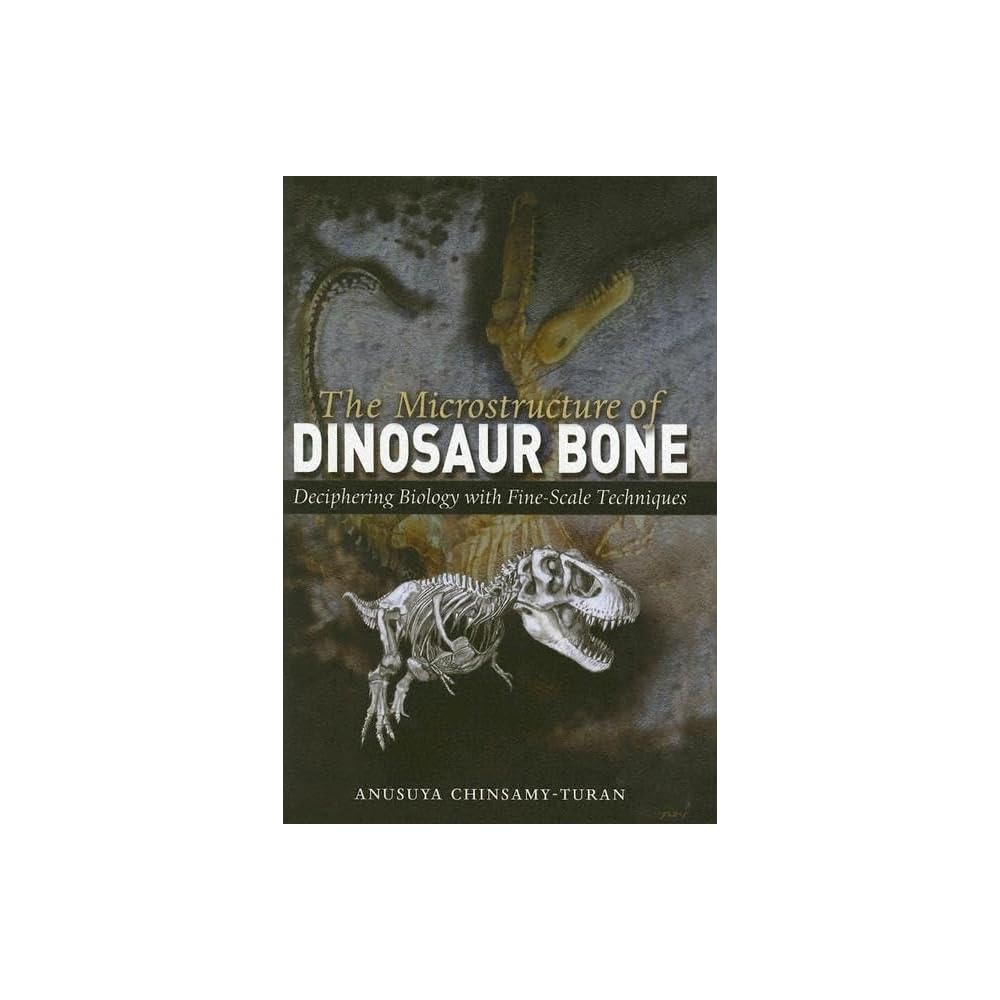

Decoding Gigantism: 5 Ways Dinosaur Bone Microstructure Diverges From Large Mammals
The silhouette of a sauropod against a prehistoric horizon is perhaps the most iconic image of Earth’s biological history. Yet, the physical reality of these behemoths presents a mechanical paradox. How did organisms weighing upwards of 80 tons—ten times the mass of a modern African elephant—avoid collapsing under their own weight? The answer is not merely found in the size of the skeleton, but in the hidden architecture of the bone itself.
Paleohistology, the microscopic study of fossilized bone tissue, has revealed that dinosaurs did not simply grow like “big mammals.” Instead, they utilized a distinct set of evolutionary toolkits that allowed them to bypass the biological ceilings that limit the size of modern land-dwelling mammals.
Here are five fundamental ways dinosaur bone microstructure diverges from that of large mammals.
1. The Fibrolamellar Fast-Track
While both large mammals and dinosaurs possess the capacity for rapid growth, the duration and intensity of this growth differ significantly at the cellular level. Large mammals, such as whales and elephants, eventually transition to slow-growing lamellar bone as they reach maturity.
In contrast, gigantic dinosaurs—particularly sauropods and large theropods—utilized fibrolamellar bone throughout the majority of their ontogeny. This tissue is characterized by a “disorganized” collagen matrix that allows for extremely rapid deposition of bone minerals. Under a microscope, dinosaur bone often looks like a construction site in a state of permanent frenzy, whereas mammal bone resembles a neatly finished metropolitan building. This allowed dinosaurs to reach massive sizes in a fraction of the time it would take a mammal of comparable scale.
2. Cyclical Growth vs. Continuous Progression
Mammals are generally characterized by continuous growth until they reach a definitive adult size. Dinosaur bones, however, act as biological recorders, similar to the rings of a tree. They possess Lines of Arrested Growth (LAGs).
Even in the most massive species, dinosaur bone microstructure reveals periodic pauses in growth. This suggests that dinosaur metabolism was more flexible than the rigid homeothermy of mammals. While a large mammal requires a constant, high-energy intake to maintain its skeleton, dinosaurs could “throttle” their growth based on environmental conditions. This metabolic plasticity allowed them to survive lean years and explode in size during times of plenty, a strategy not seen in modern terrestrial megafauna.
3. The Pneumatic Revolution
One of the most striking divergences is the “lightness” of dinosaur bone. If you were to look at a cross-section of a long bone from a blue whale or an elephant, you would find a dense, heavy structure designed to support weight or provide ballast.
Dinosaur bone microstructure, specifically in the Saurischian lineage, is often pneumatized. Through a process of postcranial skeletal pneumatization, air sacs from the respiratory system actually invaded the bone tissue. Microscopic analysis shows a hollowed-out, honeycombed architecture that provided maximum strength with minimum weight. Mammals never developed this system; our bones remain marrow-filled and heavy, creating a “weight ceiling” that prevents us from reaching the 50-plus-ton range on land.
4. Vascular Plumbing and Nutrient Delivery
The complexity of the “plumbing” within the bone—the vascular canals—is another area of divergence. In large mammals, the vascular network (Haversian systems) is highly organized and replaces old bone in a predictable pattern called remodeling.
In gigantic dinosaurs like Tyrannosaurus rex or Argentinosaurus, the vascular density is staggering. The bone is riddled with a dense network of longitudinal, circumferential, and radial canals. This high-density vascularization ensured that even the deepest parts of the bone were constantly supplied with oxygen and minerals. Recent studies into theropod histology suggest that different lineages achieved gigantism through different vascular strategies—some by increasing the number of vessels and others by increasing the vessel size—showing a level of evolutionary experimentation mammals never mirrored.
5. The Soft-Tissue Integration Factor
Recent biomechanical research into sauropod feet has highlighted a divergence in how bone interacts with soft tissue. While mammals like elephants have evolved thick “cushion pads” to protect their foot bones, dinosaur bone microstructure suggests a more integrated approach.
Sauropod limb bones show specific micro-anatomical adaptations at the joints that suggest they functioned in a “functionally plantigrade” manner despite being “skeletally digitigrade.” The bone tissue at the distal ends of their limbs was structured to distribute stress into massive soft-tissue pads more efficiently than mammalian bone. This synergy between bone microstructure and fatty cushions allowed sauropods to “soften” their steps, reducing the mechanical stress that would otherwise cause bone fatigue in animals of such immense mass.
Comparative Summary: Dinosaurs vs. Large Mammals
| Feature | Dinosaur Bone Strategy | Large Mammal Strategy |
|---|---|---|
| Growth Speed | Sustained Fibrolamellar (Explosive) | Early rapid growth, then Lamellar (Slow) |
| Growth Pattern | Cyclical (Lines of Arrested Growth) | Continuous (Determinate growth) |
| Internal Weight | Pneumatized (Air-filled cavities) | Medullary (Marrow-filled/Dense) |
| Vascularization | High-density/Chaotic networks | Organized Haversian systems |
| Stress Handling | Soft-tissue pad integration | Heavy mineral reinforcement |
The Biological Legacy
The divergence in bone microstructure reveals that dinosaurs were not simply “scaled-up” reptiles or “prehistoric” mammals. They were a unique biological middle-ground—possessing the high growth rates of mammals and birds, but the metabolic flexibility and skeletal lightness required to conquer the extreme ends of the size spectrum.
By decoding these five microstructural secrets, we move closer to understanding how the earth once trembled under the weight of giants that no modern mammal could ever hope to emulate.

Additional Information
The quest to understand how dinosaurs like the 70-ton Argentinosaurus or the 9-ton Tyrannosaurus rex achieved such massive proportions reveals a biological “arms race” against gravity and metabolism. Recent osteohistological research—the study of the microscopic structure of fossilized bone—shows that dinosaurs did not simply scale up the biology of modern large mammals. Instead, they utilized a distinct set of evolutionary “workarounds.”
Here is a detailed analysis of the five primary ways dinosaur bone microstructure diverges from that of large mammals in the pursuit of gigantism.
1. Rapid Growth via Fibrolamellar Bone (The “Growth Engine”)
While large mammals like elephants grow at a steady, relatively slow pace to reach maturity, dinosaurs utilized fibrolamellar bone tissue. This is a highly vascularized, “disorganized” bone matrix that allows for extremely rapid deposition.
- The Divergence: Mammals typically transition to slower-growing “lamellar” bone once they reach a certain size. In contrast, gigantic dinosaurs maintained high rates of fibrolamellar bone deposition deep into their sub-adult years.
- Analysis: Research indicates that some theropods didn’t just grow faster than mammals; they stayed in a high-growth “acceleration phase” for longer. This allowed a T. rex to put on up to 2.1 kilograms of weight per day during its teenage years—a rate of tissue expansion rarely seen in the mammalian fossil record.
2. Developmental Plasticity (Rate vs. Duration)
Recent studies (notably from the Royal Society) highlight that there was no “one-size-fits-all” strategy for dinosaur gigantism. Large mammals generally follow a rigid, genetically predetermined growth curve. Dinosaurs, however, showed remarkable developmental plasticity.
- The Divergence: Some gigantic theropods (like Tyrannosaurids) reached huge sizes through acceleration (growing faster), while others (like Carcharodontosaurids) achieved it through hypermorphosis (growing for a longer period of time).
- Analysis: This suggests that dinosaur bone microstructure was more sensitive to environmental “tuning” than mammal bone. This flexibility allowed different lineages to achieve gigantism independently, using different physiological “knobs” to increase body mass.
3. Vascularization and Thermoregulatory Efficiency
The “plumbing” of the bone—the microscopic channels for blood vessels—differs significantly between the two groups. In large mammals, bone remodeling (the replacement of old bone with new Haversian systems) is a constant, energy-expensive process.
- The Divergence: Dinosaur bone microstructure often reveals a higher density of longitudinal and reticular vascular canals. Even in “interrupted” growth patterns (seen in some early sauropodomorphs), the bone remains more porous to blood flow than the dense cortical bone of a rhino or elephant.
- Analysis: This high vascularity supported the “mesothermic” or “endothermic” metabolisms required to fuel a giant body. It also acted as a heat-exchange system, helping dissipate the massive amounts of internal heat generated by a multi-ton body—a problem mammals solve differently (e.g., through large ears or specialized skin).
4. Weight Mitigation: Trabecular Architecture and Soft Tissue Pads
Gravity is the greatest enemy of gigantism. Recent biomechanical data suggests that dinosaur bones were evolved to be “lighter yet stiffer” than mammalian equivalents.
- The Divergence: Sauropods, in particular, evolved highly efficient trabecular (spongy) bone distributions. Furthermore, new research (e.g., PMC9365286) highlights that sauropods combined their skeletal structure with soft tissue pads in their feet.
- Analysis: While large mammals (like elephants) also have fatty foot pads, the dinosaur version allowed for a “functionally plantigrade” (flat-footed) weight distribution while the actual skeleton remained “digitigrade” (on the toes). This hybrid system reduced mechanical stress on the bone microstructure itself, preventing the micro-fractures that would typically plague a land animal of that mass.
5. LAGs and Cyclic Growth Cycles
If you cut a cross-section of a dinosaur bone, you see Lines of Arrested Growth (LAGs), which look like tree rings. While some mammals show these, they are ubiquitous and highly distinct in dinosaurs.
- The Divergence: Large mammals usually have “determinate growth”—they reach a maximum size and stop, with their bone microstructure showing an “External Fundamental System” (EFS) that signals a halt. Dinosaur bone suggests a more “pulsed” growth strategy.
- Analysis: LAGs indicate that dinosaur gigantism was achieved through seasonal bursts. Even the largest dinosaurs would “pause” their metabolism during harsh seasons. This suggests that dinosaur gigantism was more “economical” than mammalian gigantism; they could survive resource-poor periods that would likely starve a mammal of comparable size, whose “always-on” metabolism requires constant caloric intake.
Conclusion: The “Evolutionary Divergence”
The path to gigantism for mammals (like the extinct Paraceratherium) was a struggle of energy efficiency and structural density. For dinosaurs, it was a strategy of growth plasticity and architectural lightweighting.
By integrating microanatomical data with biomechanical modeling, paleontologists have decoded the “Dinosaur Secret”: they weren’t just big mammals; they were a unique biological experiment that combined the fast growth of birds, the structural efficiency of honeycombed bone, and the environmental resilience of reptiles. This “triad” of traits allowed them to exceed the weight limits that seem to constrain modern terrestrial mammals.

